
Acrylic lamp development · completed OEM case
Rechargeable LED Modules for Acrylic Table Lamps: From Housing Design to Production
Start with the light engine the housing must accommodate. Then approve the sample, cable arrangement and market-specific accessories before production.
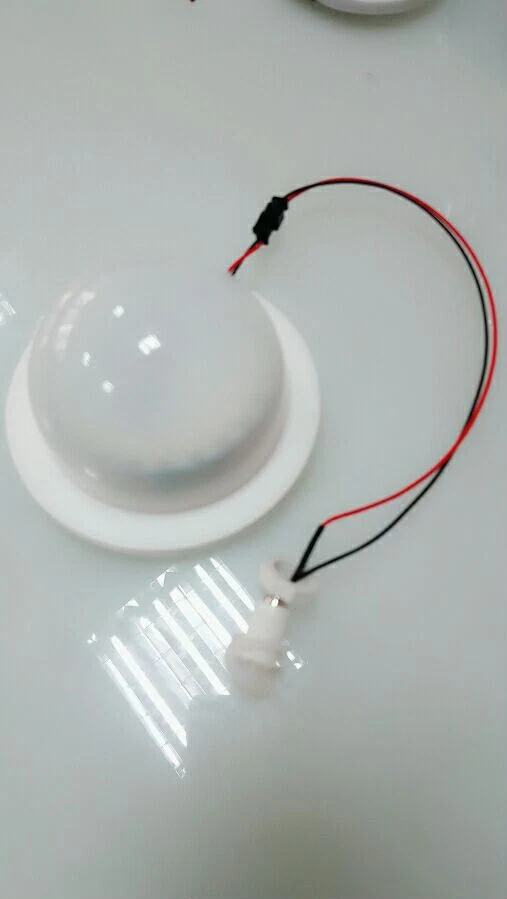
A Hong Kong customer developing an LED Acrylic 3D Table Lamp needed to check an existing rechargeable light module against a housing they planned to mold. Vcan supplied samples with a 0.5 m lead and DC socket arrangement. After sample testing and a factory visit, the customer authorized production. The order was completed and shipped with the agreed charger plugs, labels and CE/RoHS reports, and the customer confirmed receipt.
Design around the agreed light engine
Check the module before committing the housing to tooling.
The customer's task was not replacing a failed light in an existing piece of furniture. They were developing their own acrylic table lamp and preparing its housing mold. The module therefore became an input to the housing design: the enclosure had to accommodate the selected light engine and its connection arrangement.
The useful question was not simply “What diameter is the module?” It was “How will this assembly sit inside our product, and how will it be installed, connected and accessed?” The mounting area, available height and cable route needed to be considered together rather than checked after the housing design was fixed.
For a new lamp, also test how the selected source illuminates the actual acrylic structure. A mechanical fit does not, by itself, confirm the finished lighting effect. This case documents the module development and delivered order; the photographs below show the module and shipment, not a completed customer lamp.
Verify the assembly, not just the part
A 0.5 m lead brought the connection into the housing plan.
The sample configuration included a 0.5 m connection lead with a DC socket arrangement. The real product photographs also show the cable connection detail. These features were part of the assembly the customer needed to evaluate, not accessories to decide independently after approving the module.
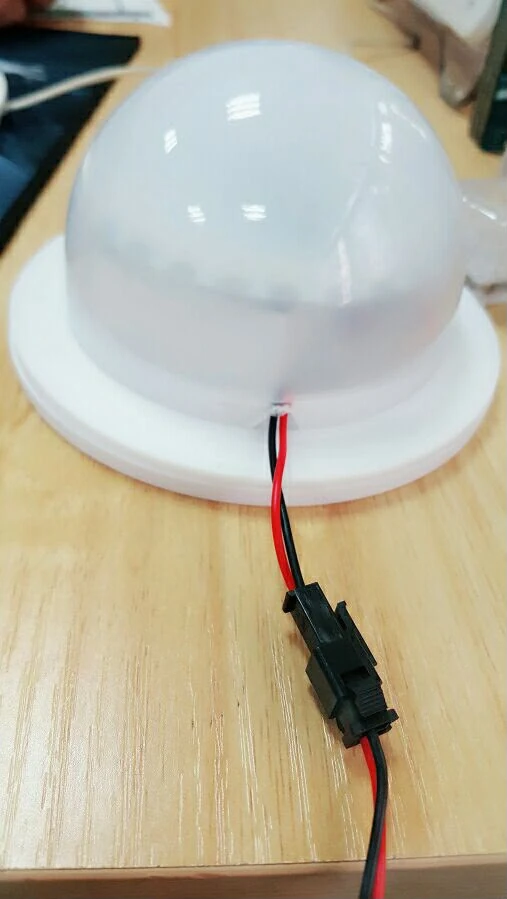
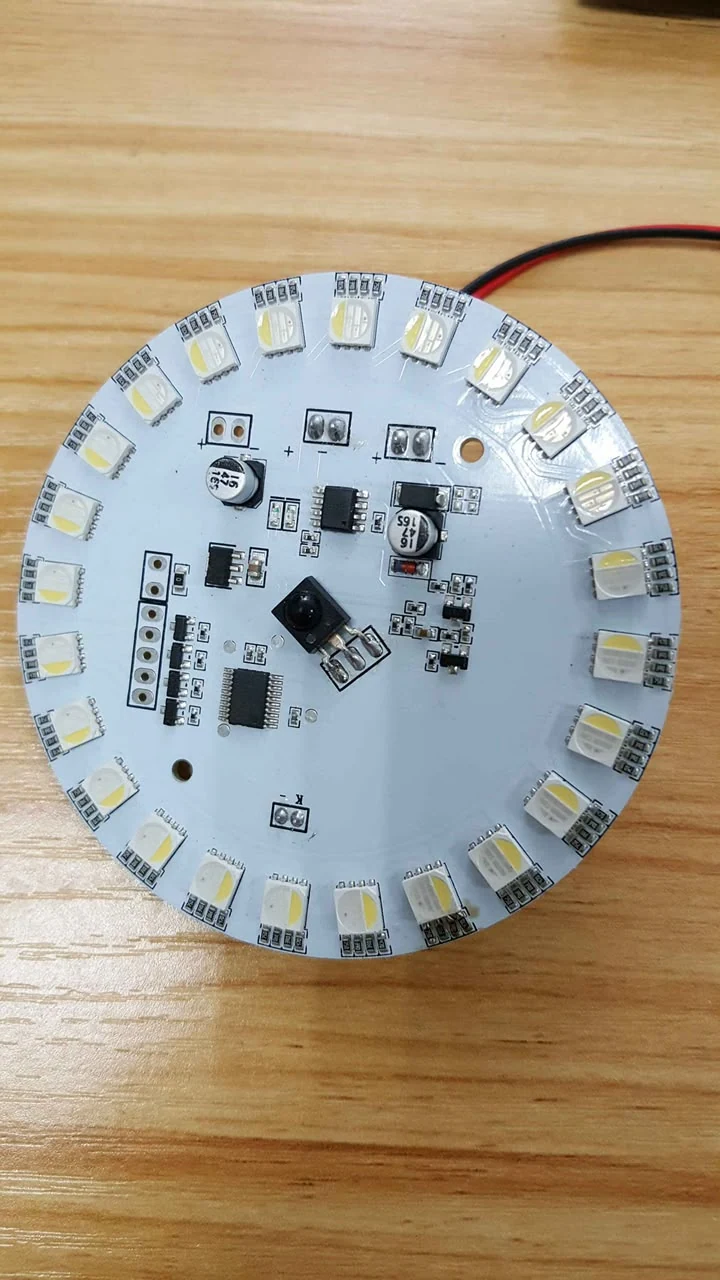
When reviewing a similar lamp design, identify where the socket will sit, how the lead will pass through the housing and whether the connection remains accessible during assembly and charging. The exact connector, polarity and charging arrangement must match the approved configuration; cable length alone does not define electrical compatibility.
For broader mechanical selection, use the LED module buying guide. This project focuses on moving a customer's housing design through sample approval and into production, rather than repeating that general measurement checklist.
An illustration of the review process
Measurement photographs support a drawing review; they do not replace it.
The separate reference photographs below show three different measurements on a Vcan dome-style module: complete outer diameter, raised-cover diameter and overall height. They explain why one nominal size cannot define the whole installation envelope.
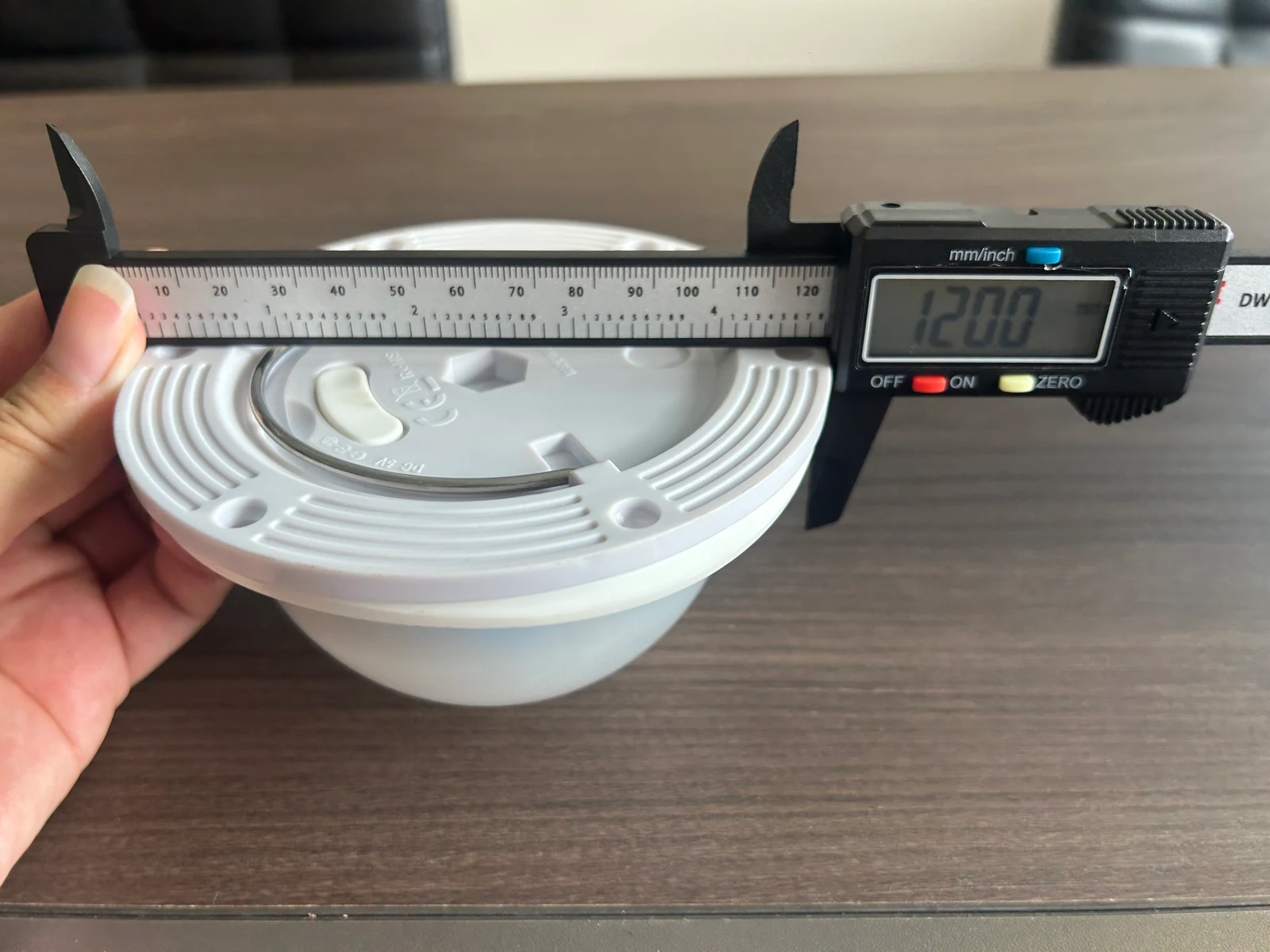
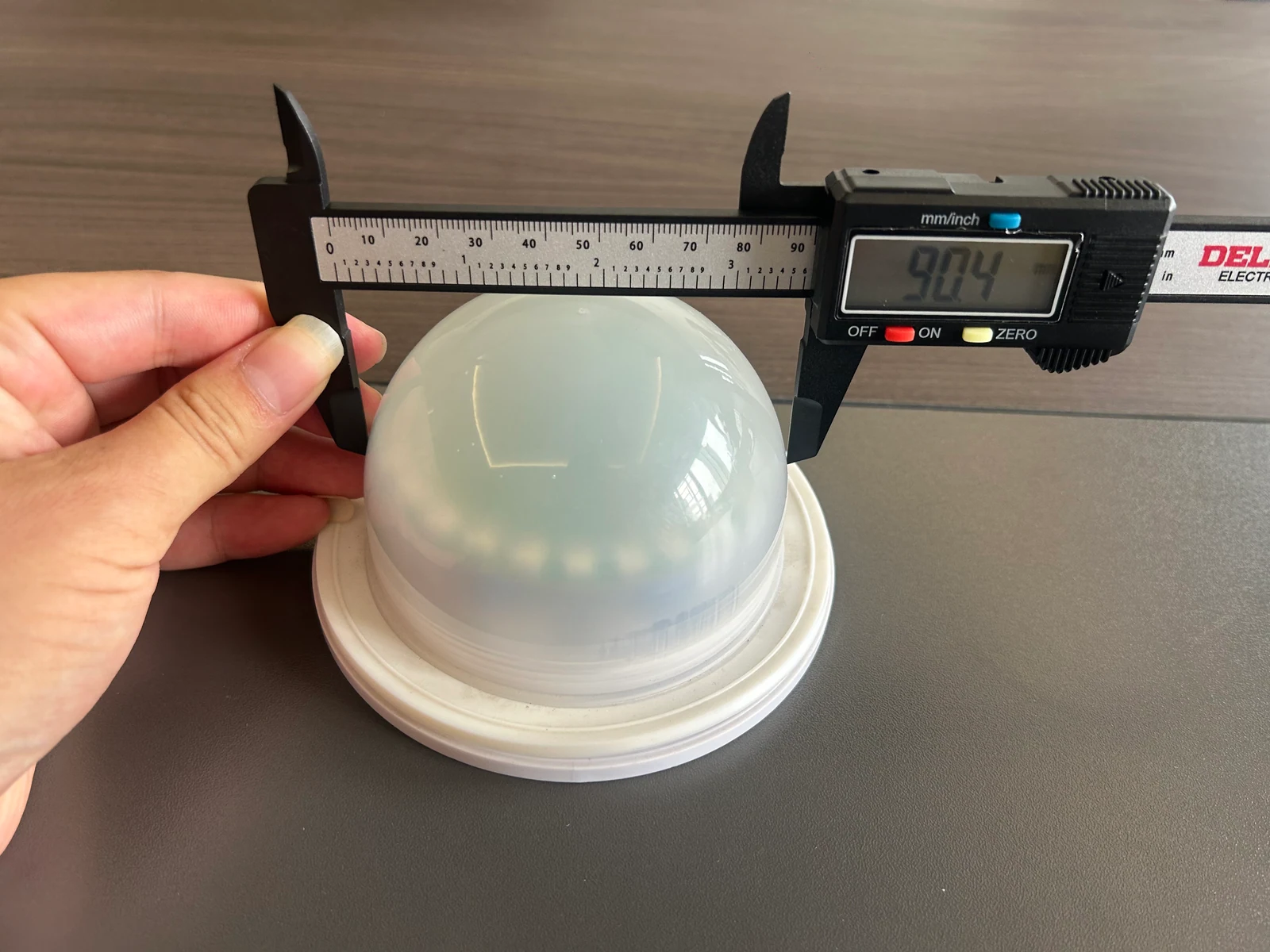
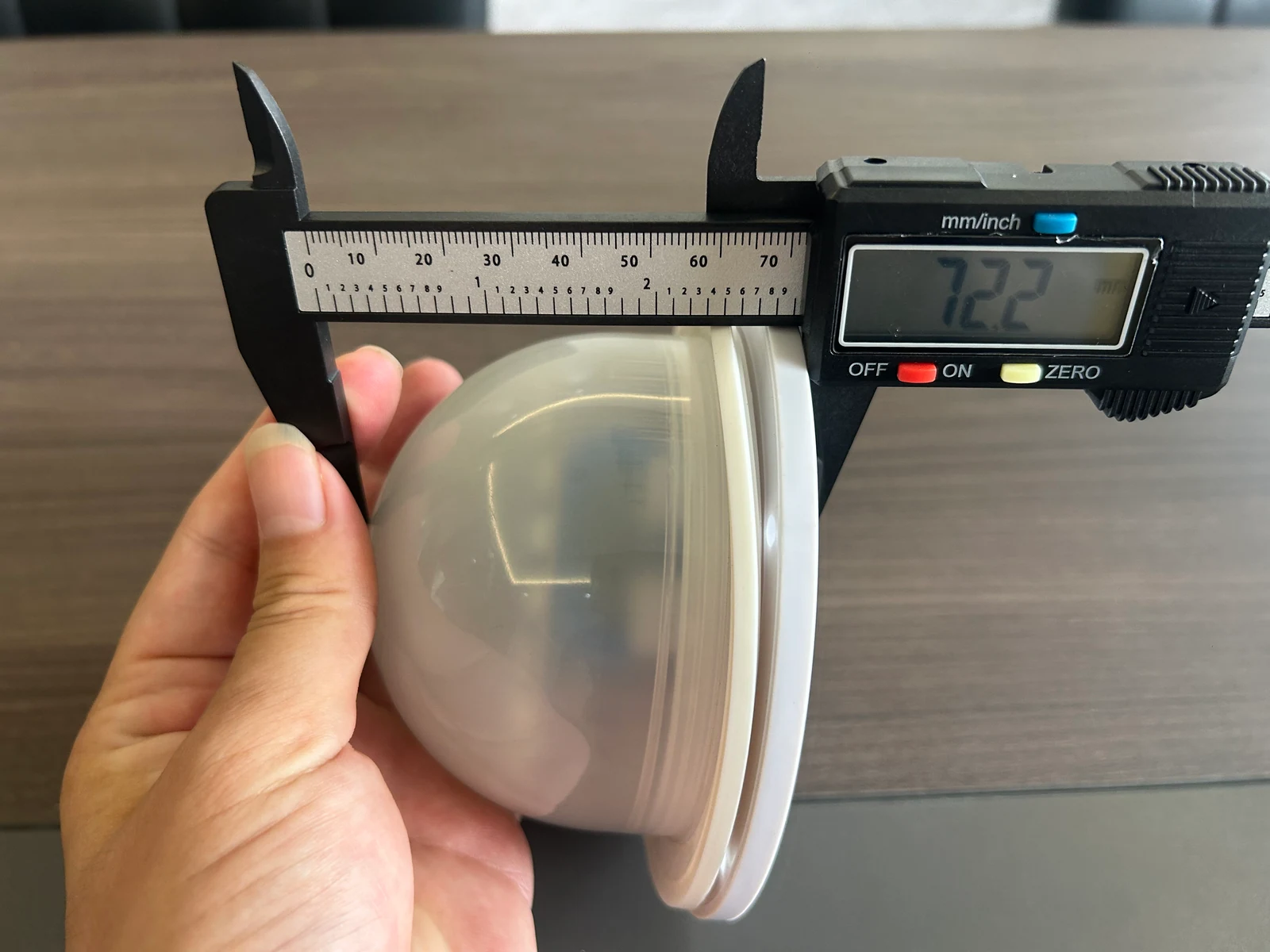
Reference example, not this order's engineering dimensions. These are original measurement photographs of a separate module. They are not a mold-ready drawing of the delivered product. In particular, the measured cover diameter must not be copied directly as the housing opening size. Confirm the selected part's drawing, mounting references, fit allowance and production tolerances before tooling.
From evaluated samples to production
Keep one module configuration while distinguishing the charger plugs.
After testing the samples and visiting Vcan's factory, the customer confirmed that production could proceed and sent the deposit confirmation. The production instructions then identified the accessories, documents and packing information needed for shipment.
| Production item | Confirmed arrangement for this order |
|---|---|
| LED module | The same agreed module configuration for both versions |
| Connection | 0.5 m lead with DC socket arrangement |
| Charging adapter | EU or UK plug; only the adapter plug differed |
| Individual packaging | White boxes labeled with the customer's specified version name and item code |
| Outer packaging | Carton markings supplied by the customer |
| Documentation | Requested CE and RoHS reports supplied before shipment |
| Outcome | Production completed, shipment delivered and receipt confirmed |
The EU and UK labels distinguished charger-plug versions, not two different LED module designs. Keeping this distinction clear lets a buyer specify the correct accessory and packaging without unnecessarily changing the approved light-engine configuration.
Vcan provided the CE and RoHS reports requested for this order before shipment. This is a project-specific documentation fact, not a claim that the customer's complete acrylic lamp—or every future module variant—was certified by those reports. Documentation for a new configuration should be agreed during the quality and compliance review.
Complete the order as agreed
White-box labels and carton markings were part of the handover.
The customer requested a product name and internal item code on each white box, with separate labels for the EU- and UK-plug versions. They also supplied the outer-carton markings. These requirements were followed alongside the product configuration and pre-shipment reports.
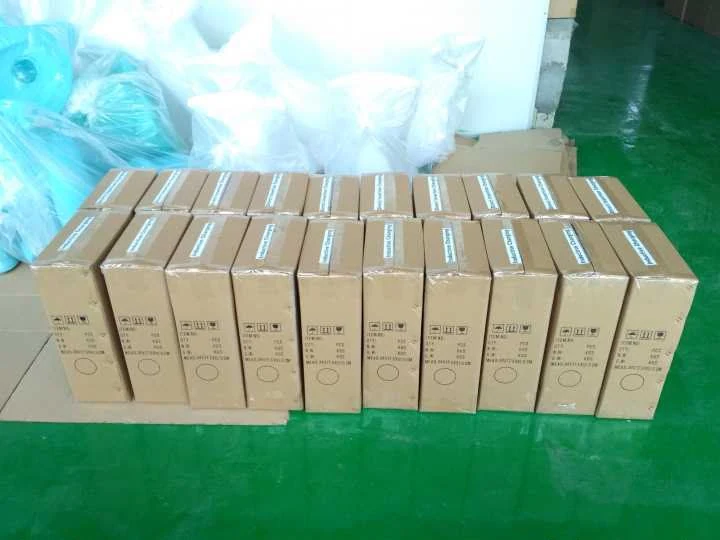
The order was completed and shipped. The customer's reply, Well received
, confirmed receipt of the goods. It should be read as delivery confirmation, not an independent test report on the finished lamp's lighting, runtime or performance.
Apply the sequence to your own lamp
Agree the light engine before approving the production package.
- Define the lamp and housing: provide its intended structure, installation space and proposed module position before finalizing tooling.
- Approve the physical sample: check mounting, cable routing, charging access and lighting inside the intended assembly.
- Freeze the agreed configuration: confirm the module, lead, connector, charger and required functions.
- Identify accessory versions: specify EU, UK or other required plugs and keep the labels consistent with the approved packing list.
- Complete the shipment requirements: agree reports, individual-box labels and carton markings before dispatch.
This case shows a development-to-delivery sequence around an existing rechargeable module. It does not establish that any dome module can be installed unchanged in every acrylic lamp. For your design, compare the rechargeable LED module range or discuss an OEM lighting configuration.
Send your housing sketch or photo, installation space, proposed cable route, lighting requirements and destination markets. We can review a suitable sample and the information needed before production.
Questions
Acrylic lamp development and production preparation.
Should the LED module be selected before the lamp housing mold is finalized?
For a lamp built around an existing module, confirm its installation envelope, mounting arrangement, charging access and cable route before finalizing the housing. Test a physical sample in the proposed assembly; a nominal diameter alone is not a mold specification.
Were the EU and UK versions different LED modules?
No. In this delivered project, only the charging adapter plug differed. The LED module and its other agreed configuration were the same. This distinction helped define separate packaging labels without creating two different light-engine designs.
Can the measurement photographs be used directly to machine a mold?
No. The measurement photographs are a separate reference example, not the exact engineering drawing of the delivered module. Confirm the selected module drawing, mounting datums, tolerances and housing allowances before tooling.
Were CE and RoHS reports provided for this order?
Yes. Vcan supplied the CE and RoHS reports requested for this project before shipment. That does not establish certification of the customer's finished acrylic lamp or every possible module configuration.