
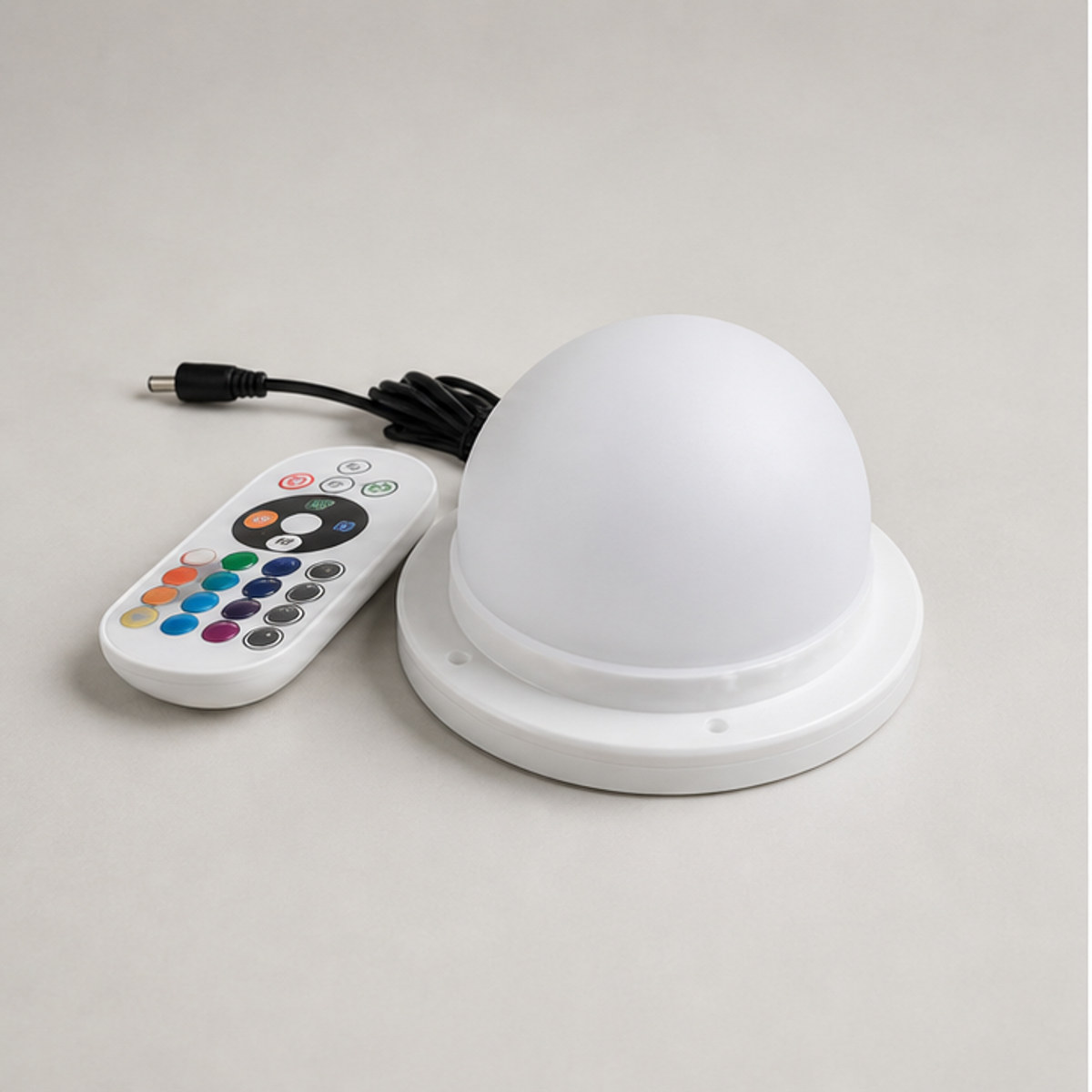
Rechargeable LED module selection
Rechargeable LED Module Buying Guide for Furniture
A practical method for choosing a light module for illuminated furniture, translucent products, replacements and OEM projects.
Choose a rechargeable LED module from the product inward. First confirm the application and installation space, then match the charging method, water exposure, light output, battery and controls. A model should not be selected from diameter, battery capacity or appearance alone.
For a new product, start with the shell opening and expected use. For a replacement, record the complete original system: module, charger or induction base, remote, connector, mounting and sealing. Compare verified dimensions and electrical requirements before ordering.
Selection sequence
Make the six important decisions in the right order.
| Decision | What to confirm |
|---|---|
| Application | Identify the product, installation position, expected light diffusion and whether it will be used indoors, outdoors or in an event-rental environment. |
| Mechanical fit | Measure the complete flange, centre opening, mounting-hole pattern and available depth. A nominal diameter alone does not prove compatibility. |
| Charging | Choose an accessible direct-charge connection, a matched induction base, a removable battery or a project-specific charging arrangement. |
| Water exposure | Match the module rating and the finished installation to rain, splashing, cleaning and storage conditions. |
| Light and runtime | Confirm RGB or RGBW output, required brightness, battery capacity, operating pattern and realistic charging routine. |
| Control | Choose IR, RF, DMX, Wi-Fi or Bluetooth only after checking range, installation and system-integration requirements. |
Mechanical fit first
Measure the opening, flange, holes and available depth.
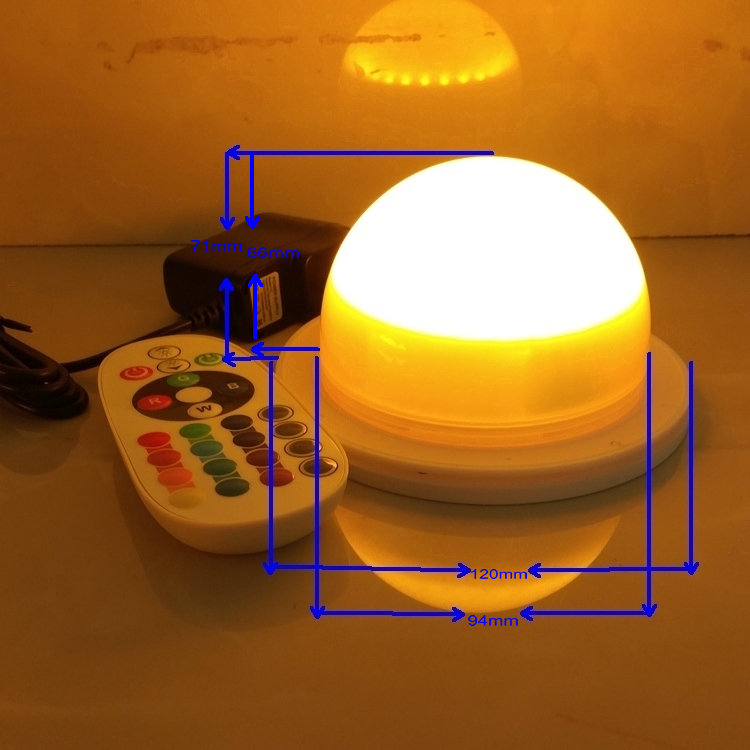
Rechargeable LED modules are often described by a nominal diameter, such as 85 mm or 120 mm. That number is useful for shortlisting, but it does not describe the complete installation. Measure the outside flange, centre opening, screw-hole count and spacing, gasket position, charging access and the space available inside the product.
A deeper diffuser may improve light distribution inside a large translucent shell but may not fit beneath a shallow seat or table. A wider flange can cover the opening but still leave the holes misaligned. Review a drawing or physical sample before approving a production or replacement order.
Charging and water exposure
Choose the complete charging system, not only the module.
Direct-charge modules use an accessible cable, socket or charging contact. They are straightforward to inspect and can suit indoor furniture, rental products and designs with protected charging access. Induction-charge modules use a matched external base and remove the exposed charging contact from the module, which can support a more sealed installation.
Read our detailed comparison of direct-charge and induction-charge LED modules. For rain, splashing or frequent cleaning, also compare IP65 and IP68 module options. An IP rating applies to the tested module; the finished furniture still depends on its opening, gasket, fasteners, orientation and installation.
Performance and user experience
Balance light output, battery, runtime and controls.
Specify whether the product needs RGB effects, dedicated white LEDs or both. Brightness and diffusion should be checked in the actual translucent shell because wall thickness, pigment, shape and distance from the light source affect the visible result.
Battery capacity is only one runtime factor. LED power, brightness, colour mode, control electronics, temperature and battery condition all affect operating time. Confirm the real charging routine as well: a hospitality or rental fleet may value simple charging and matched spare sets differently from a permanently installed OEM product.
IR is a practical standard control for many products. RF, DMX, Wi-Fi and Bluetooth can be reviewed when range, grouped control, venue integration or app operation is required. Compare the options in our LED module control guide.
Representative Vcan platforms
Shortlist by size, charging and application.
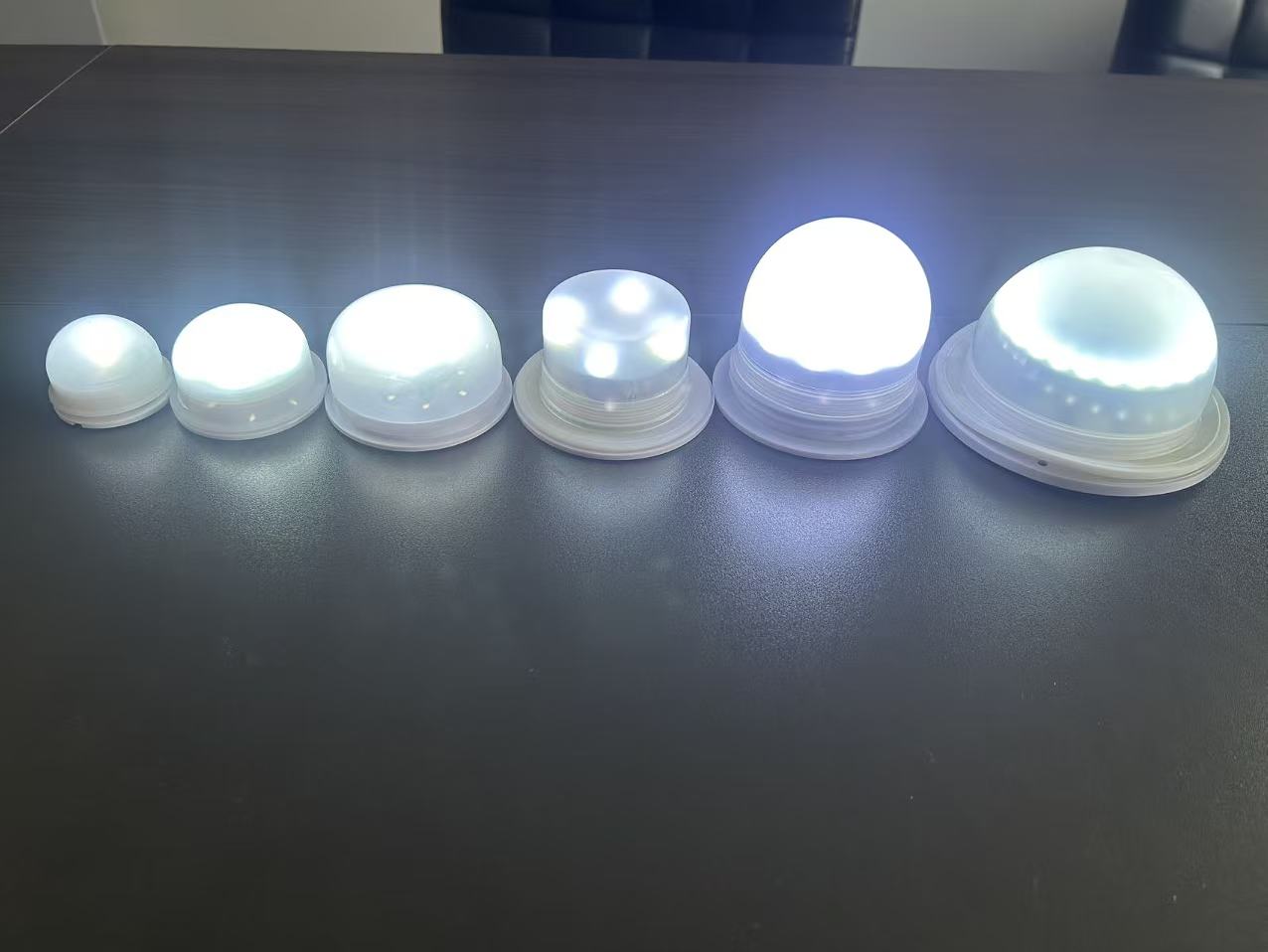
| Model | Size | Charging | Rating | Battery | Typical fit |
|---|---|---|---|---|---|
| VC-LS45 | 45 mm | Direct charge | IP65 | 300 mAh | Small displays, portable lamps and compact translucent products |
| VC-L85 | 85 mm | Direct charge | IP65 | 1,500 mAh | Compact PE furniture, décor and compatible replacements |
| VC-LI85 | 85 mm | Induction charge | IP68 | 1,500 mAh | Compact products needing a sealed induction-charging option |
| VC-LN120 | 120 mm | Bottom direct charge | IP65 | 4,400 mAh | Tables, bars, planters, light balls and PE furniture |
| VC-LI120 | 120 mm | Induction charge | IP68 | 2,000 mAh | Outdoor, hospitality and event products using a matched base |
| VC-LB175 | 175 mm | Direct charge | IP65 | 3,000 mAh | Tables, seating and larger translucent components |
| VC-L200 | 200 mm | Side direct charge | IP65 | 4,000 mAh | Large illuminated products requiring broad light diffusion |
These are reference configurations rather than universal fits. View the complete rechargeable LED module range for technical details and alternative formats. Suitable OEM projects can be reviewed for LED layout, battery, charging interface, mounting and controls.
Existing furniture
Treat replacement as a compatibility check.
Photograph the original module from the front and underside, its charger or induction base, remote, label and installation opening. Record the module diameter, hole spacing, opening diameter and available depth. Confirm voltage, charging method, connector or base and control system before testing a replacement.
Follow the illustrated guide to replace an LED module in illuminated furniture, or use the replacement compatibility service when the original model is unknown. Do not drill, cut or combine unverified chargers and modules simply because the visible dimensions look similar.
Information for a useful recommendation
Prepare these details before requesting a quotation.
- Product type, photos and intended indoor or outdoor use
- Opening diameter, flange, hole spacing and available depth
- Required light colour, brightness and expected operating time
- Preferred direct, induction or alternative charging arrangement
- Control method and any grouped-control or OEM requirements
- Quantity, destination country and project schedule
Common questions
Before choosing a rechargeable LED module.
What size rechargeable LED module should I choose?
Start with the furniture opening, complete flange diameter, screw-hole pattern and available installation depth. The module must fit the product mechanically before its battery, LEDs or controls are considered.
Is a larger battery always better?
No. Runtime also depends on LED power, brightness, colour mode, control electronics, battery condition and operating temperature. A larger battery can also change cost, weight, charging time and housing requirements.
Should outdoor furniture use induction charging?
Induction charging can remove an exposed charging contact from the module and support a more sealed design. The correct choice still depends on the furniture shell, charging-base alignment, installation and real water exposure.
Can a rechargeable LED module replace any similar-looking light?
No. Confirm dimensions, mounting, voltage, charging method, connector or base, polarity, controls and sealing. Similar appearance or diameter is not proof of compatibility.
What should I send for an OEM or replacement recommendation?
Send product and module photos, opening and mounting dimensions, charger and remote details, expected environment, required quantity, destination country and any control or white-light requirements.
Specifications shown are reference configurations. Confirm the current drawing, approved charging accessories, sample performance and installation conditions before production or replacement.