
LED module control guide
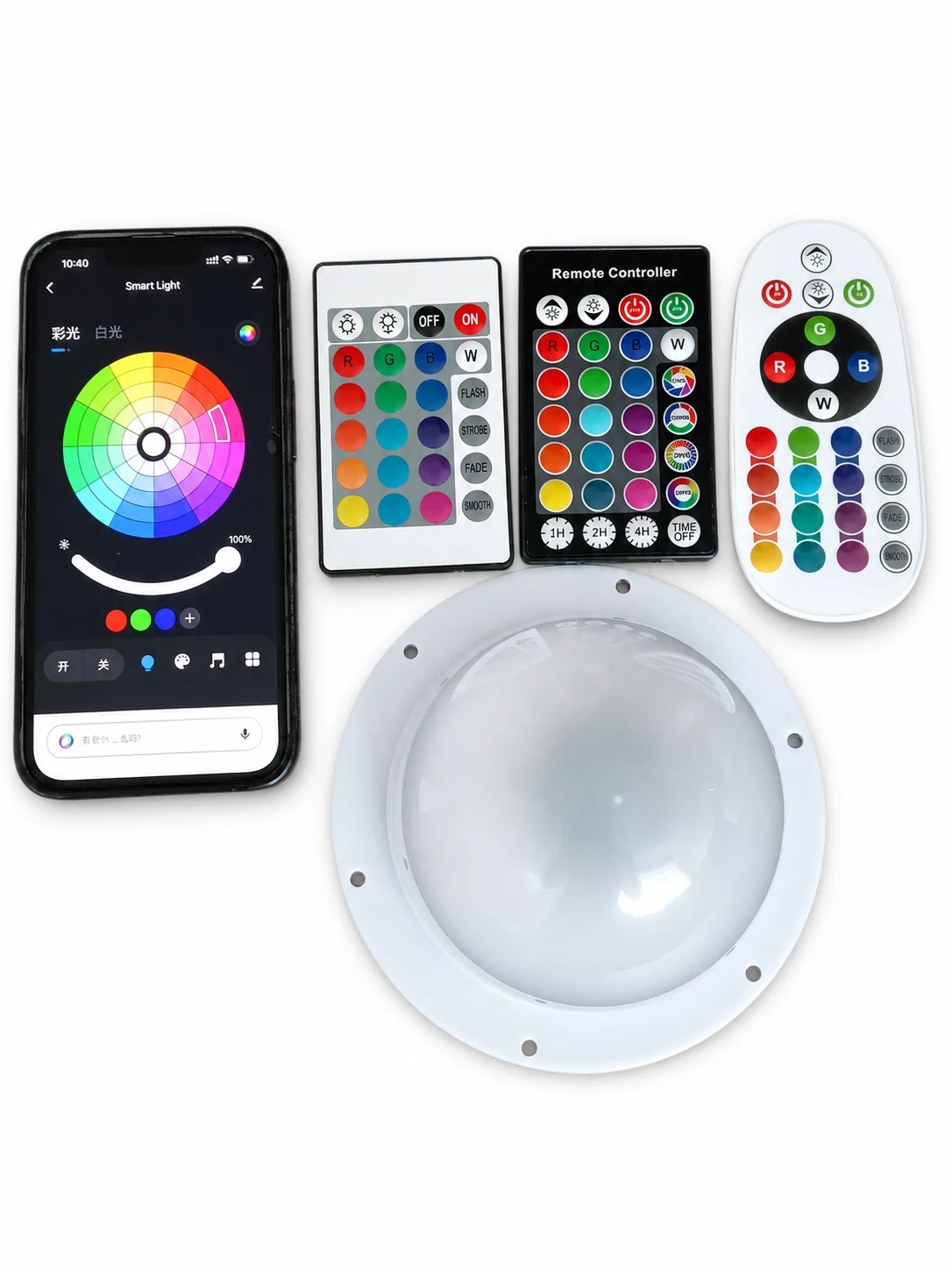
IR, RF, DMX, Wi-Fi or Bluetooth: Choosing LED Module Control
A practical comparison for rechargeable LED modules, LED light units, portable LED kits and OEM lighting systems.
Control selection changes how an LED module is installed, operated and serviced. IR is the usual standard, while RF, DMX, Wi-Fi and Bluetooth can support longer-range, grouped, professional or app-based control. The right choice starts with the product and user—not with the name of the technology alone.
When no special control method is requested, Vcan normally supplies IR control. RF, DMX, Wi-Fi and Bluetooth can be reviewed for suitable models and OEM projects. Not every control option fits every module.
Choose by application
Define the user, distance and number of lights first.
A single rechargeable LED light inside a portable lamp has different control needs from 100 LED units used across an event venue. Before selecting a protocol, confirm who will operate the product, how far away they will be, whether several lights must respond together and whether the system must integrate with professional equipment.
The same Vcan light engine may be described by buyers as an LED module, LED light module, LED unit, LED lamp unit, rechargeable LED kit, ABS light or small portable light kit. Whatever term is used, the controller and receiver must be designed as one compatible system.
Typical applications include LED tables, chairs, sofas, bars, floor lamps, balls, cubes, flowerpots, ice buckets, swings, acrylic displays and translucent rotomoulded PE products. The application determines the required range, grouping, waterproofing and user interface.
Control options compared
IR, RF, DMX, Wi-Fi and Bluetooth serve different workflows.
| Method | User interface | Practical characteristic | Typical fit |
|---|---|---|---|
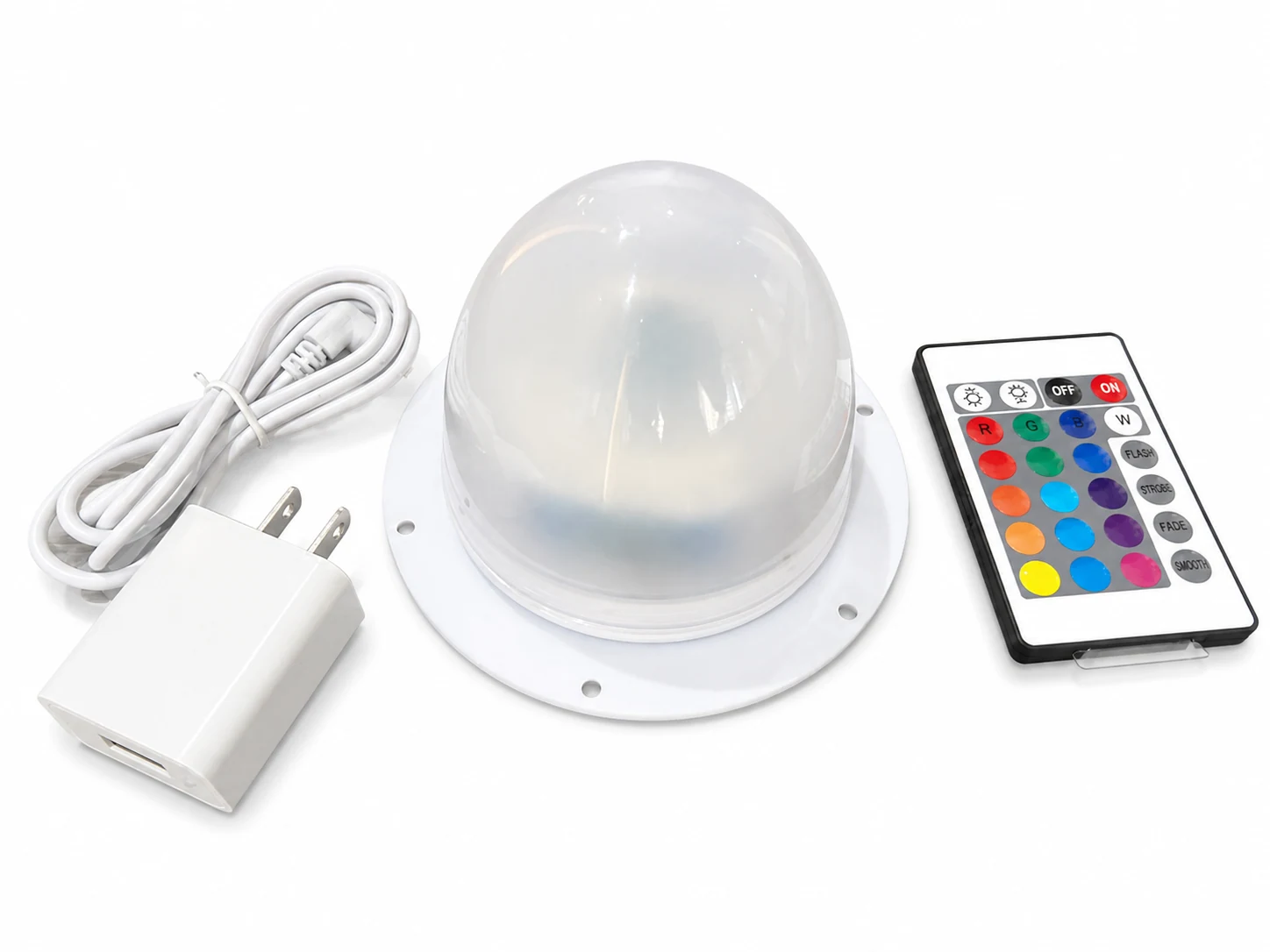
| IR | Handheld infrared remote | Simple individual control; usually requires line of sight | Standard choice when no special control method is requested |
| RF | Radio-frequency remote or transmitter | No direct line of sight; suitable for longer-range or grouped operation | Events, rentals and projects needing easier multi-unit control |
| DMX | DMX controller and compatible receiver | Addressable, coordinated control within a professional lighting system | Stages, clubs, installations and synchronised event lighting |
| Wi-Fi | Phone, tablet or network interface | Network-based control; setup depends on the selected hardware and software | Smart venues, remote management and connected OEM products |
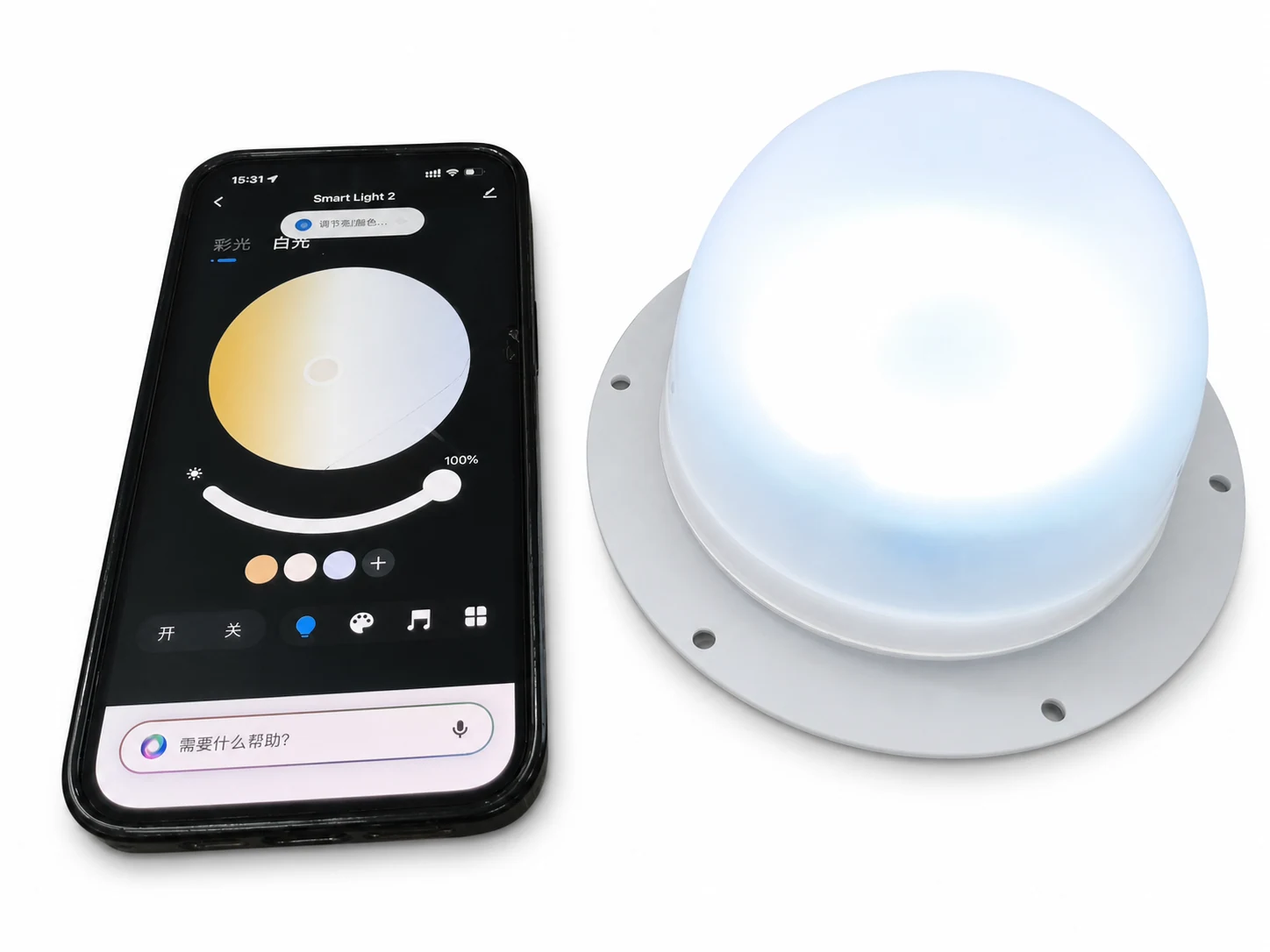
| Bluetooth | Local smartphone app | Convenient nearby control without a separate handheld remote | Portable lamps, displays and consumer-facing illuminated products |
This table is a selection guide, not a promise that every option is available for every model. Final compatibility depends on the module, receiver, firmware, battery, installation space and order requirement.
Standard configuration
IR control is simple and familiar for individual products.
IR remotes provide direct access to power, brightness, colour and lighting effects. They are economical, easy to explain to users and suitable for many individual illuminated products. Because infrared normally requires the remote to face the receiver, furniture shells, installation depth and receiver position should be checked.
Advanced control
Use RF, DMX or app control when the project needs more.
RF can be useful when direct line of sight is inconvenient or when operators need easier control across a venue. DMX is designed for coordinated lighting installations where multiple units must be addressed or synchronised with professional show control.
Wi-Fi and Bluetooth add phone or tablet operation. Bluetooth is often considered for nearby local control, while Wi-Fi can support connected products and network-based workflows. The app, operating system, receiver and long-term support requirements should be agreed before mass production; “app control” is not one universal protocol.
OEM interface
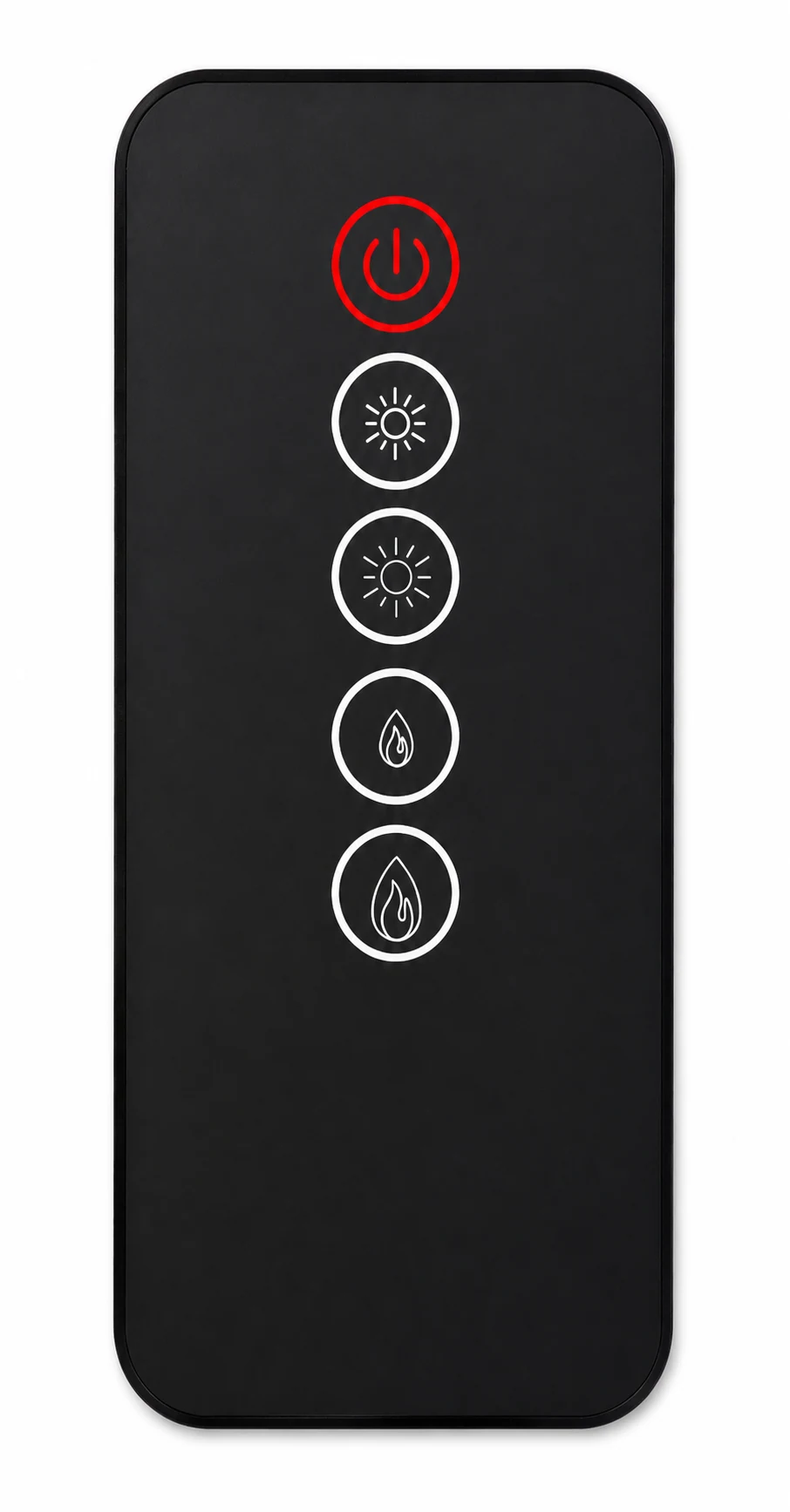
The remote faceplate can carry the customer's own design.
For OEM projects, the remote-control faceplate can be customised with the customer's company logo, button symbols, colours, graphics and an agreed layout. The button functions must still match the selected controller and product requirements.
- Customer company logo
- Button symbols and graphics
- Faceplate colours and visual style
- Agreed button arrangement and functions
MOQ: 300 pcs for a customised remote-control faceplate.
OEM specification
Send the complete operating requirement—not only a protocol name.
Tell Vcan how many modules must respond together, the operating distance, indoor or outdoor conditions, charging method, available installation space and intended user. Also identify any existing controller, app, DMX system or frequency requirement that the new module must work with.
Other module options can be reviewed in the same project, including strong magnets, weak magnets or a non-magnetic structure; RGB colour effects; and warm white, neutral white or cool white LEDs where the selected configuration supports white light.
For an existing furniture light, confirm the original remote and module together through the replacement LED module compatibility review.
Control selection checklist
Send these details for a practical recommendation.
- LED module model, required diameter and available installation depth
- Product application and indoor or outdoor environment
- Number of modules controlled individually or as a group
- Required operating distance and whether line of sight is available
- IR, RF, DMX, Wi-Fi, Bluetooth or an existing system to match
- Required colours, white-light tone, magnetic structure and charging method
- OEM logo, faceplate artwork, quantity and destination country
Common questions
Before confirming a controller or customised remote.
Which control method is standard for Vcan LED modules?
IR remote control is the standard method when the customer does not request another system. RF, DMX, Wi-Fi and Bluetooth options can be reviewed for suitable models and OEM projects.
Can one remote control several LED modules?
It may be possible, but the answer depends on the receiver, frequency, protocol, grouping requirement and operating environment. Confirm the intended quantity and control distance before ordering.
Can the remote-control faceplate carry our company logo?
Yes. For OEM projects, the faceplate can be customised with the customer's logo, graphics, colours, button symbols and an agreed layout. The minimum order quantity for a customised remote-control faceplate is 300 pieces.
Is the black remote shown on this page the only custom design?
No. It is one customer-specific example shown only as a reference. Other faceplate appearances and layouts can be developed according to the project requirements and technical feasibility.
Are all five control methods available for every LED module?
No. Compatibility depends on the module size, internal space, battery, receiver, firmware, control distance and order requirements. Vcan should review the selected model and application before confirming an option.
Control functions and compatibility vary by model and project. Confirm the current technical specification, approved accessories, sample test and OEM artwork before mass production.