
Light output · product housing · module selection
How Bright Should a Rechargeable LED Module Be for Your Product?
Match the light output and distribution to your finished product before approving a sample.
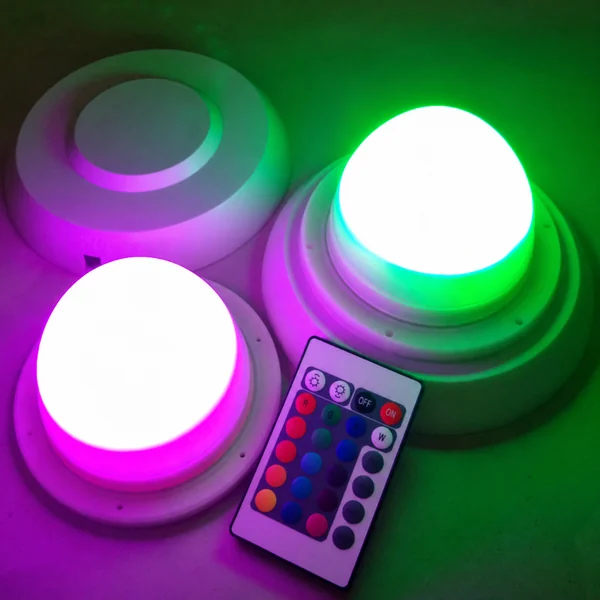
Choosing a rechargeable LED module starts with what your finished product needs to look like. A module that produces the desired effect inside a compact illuminated stool may give a different result inside a tall lamp or a large planter. Tell your supplier both the lighting result you need and how long it must last.
Real customer enquiries show how these requirements arise. One buyer asked for 200 lumens and then questioned whether a 1000mAh battery would be enough. Another wanted a brighter light and was open to a different shape. These were selection questions; the requested figures are not specifications claimed for a delivered Vcan module.
Start with the light your finished product needs
Is your product intended to create a gentle decorative glow, illuminate an entire translucent shell, or provide useful light outside the lamp? These are different requirements. A photo of the housing and a description of the intended use give a supplier more to work with than “as bright as possible.”
If you have a target in lumens, include it in your enquiry. Also explain whether that target refers to the module itself or the complete assembled lamp. The diffuser, shell and internal arrangement affect the result, so the two should not be treated as interchangeable.
If you are replacing an existing module, explain what you want to retain or improve. Is the old light satisfactory when it works? Is the product too dim, or is one area much darker than another? The answer helps distinguish a replacement request from a lighting redesign.
Battery capacity does not specify brightness
A battery capacity stated in mAh does not tell you how much light a module produces. A request for “a larger battery” also leaves the intended brightness and operating time unresolved.
Specify both requirements: the light setting your product needs and the time it should operate at that setting. If you use colour-changing modes, identify the important colours or sequence. For more on operating time, see the LED module runtime and brightness guide.
Do not select a battery configuration from its capacity alone. The proposed module, available space, charging arrangement and required operating setting need to be reviewed together.
Check where the light needs to reach
A brighter source and more even illumination are different goals. Before changing the module, identify the part of the product that needs improvement.
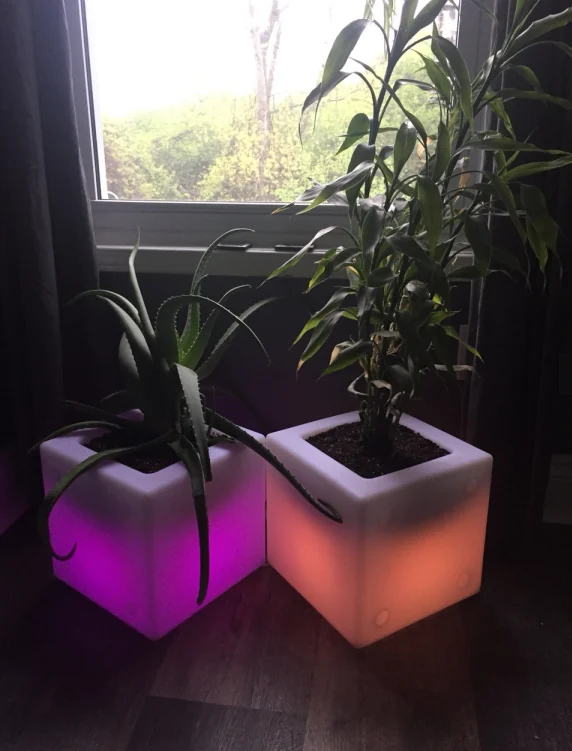
For example, a customer discussing rectangular planters wanted light across the whole product. That project later involved a request for a wired solution. It illustrates why the product shape and intended coverage need to be established before recommending a rechargeable module.
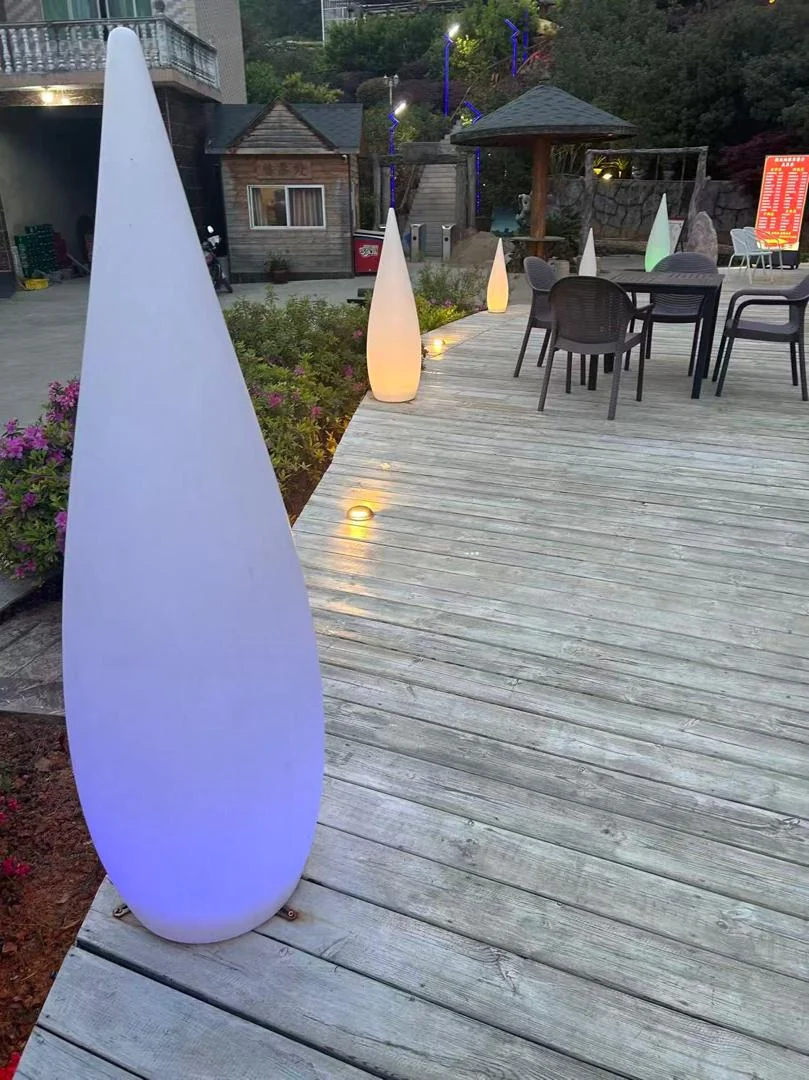
For tall products, compare the source position with the areas that appear dim. Vcan's F8 tall-floor-lamp case shows one project-specific approach using a linear light. It is a reference for discussing layout, rather than a reason to select the same arrangement for every lamp.
Define the white-light or colour setting
“White,” “warm white” and an RGB colour effect describe different choices. Confirm the required white-light appearance or colour mode before comparing samples. Otherwise, a comparison may change the colour, output and operating setting at the same time.
If you are deciding between a white-only configuration and colour-changing lighting, use the white versus RGBW module guide alongside the brightness discussion.
Evaluate the sample inside the actual housing
Check the assembled product at the intended brightness and control setting. Look at the areas the customer will see, including any dark sections or concentrated bright spots. Then check operating time using the same approved setting.
A product photograph can help describe the effect, but camera exposure does not measure brightness. Keep the sample version, housing, selected setting and observations together so that a later discussion refers to the same setup. The sample testing checklist can help organize that review.
What should I send for a module recommendation?
- Photos or a drawing of the finished product and its internal space.
- Whether you need a replacement or are developing a new product.
- Required light output, if known, and the areas that need illumination.
- White-light specification or required colours and control functions.
- Operating time at the intended setting and preferred charging arrangement.
- Photos and identification of the old module, if one is available.
You can compare Vcan's rechargeable LED module range or discuss your product requirements. The aim is to agree a suitable complete lighting module and sample configuration for your product.
Your product, your lighting requirement
Discuss the brightness your product needs.
Share the housing photos, intended light setting, target output if known, required working hours and quantity.
Frequently asked questions
Can I choose a module only by its lumen rating?
Use the rating as one part of the specification. Also check the module dimensions, light distribution, housing, controls, charging and operating time. Confirm what the quoted rating describes before comparing options.
Will a larger battery make my lamp brighter?
Battery capacity alone does not establish light output. Ask for the proposed module's output and operating time at the intended setting rather than assuming a larger battery changes brightness.
Can I request a brighter replacement for my existing furniture?
Yes, you can ask Vcan to review the requirement. Share the old module, installation dimensions and what you want to improve. A brighter replacement still needs its fit, controls, charging and sealing reviewed.
What if I do not know how many lumens I need?
Describe the intended use and show the product or a reference effect. Explain whether you need a decorative glow, illumination across the shell, or light outside the lamp. A sample evaluation can then help define the required result.
Can the same module illuminate every product shape?
Selection depends on the product. Compare the available space and light distribution inside each housing, and assess a representative sample before approving the configuration.