
Battery and charger configuration
Charging Rechargeable LED Modules: Why a Larger Battery Needs a Matching Charger
Already planning a larger battery for your illuminated furniture? Review the charging configuration at the same time. Battery capacity is only one part of the system that must be ready for the next use.
The short answer
A larger battery does not, by itself, define the right adapter or guarantee a particular charging time. Confirm the module's approved input voltage, adapter, cable and charging circuit as one configuration. Then test charging with the actual sample before setting an operating schedule.
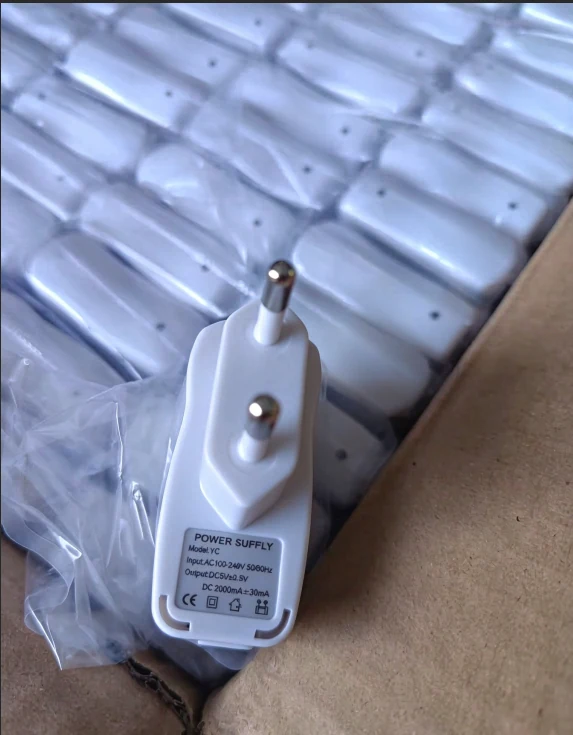
In one Vcan customer project, the battery configuration was increased to 6000mAh and the delivered configuration used a 5V/2A adapter. Vcan reviewed the charging arrangement and made charging-circuit resistor changes as part of the module's protection measures. The aim was to shorten charging time within the approved design limits, not to increase charging current without restriction. This was a project-specific configuration—not a rule that every Vcan module should use a 2A adapter.
Why review charging when battery capacity changes?
Buyers often focus on how long a rechargeable light will run. The other practical question is how it will be charged before its next use. A product that meets the lighting requirement still needs an appropriate charging arrangement and a realistic turnaround plan.
The Vcan project shows why a battery change should prompt an engineering review. The customer was evaluating a larger-battery module, and Vcan's engineer recommended a different adapter specification for the charging arrangement. Vcan subsequently supplied the agreed 5V/2A configuration. The useful lesson is to approve the complete configuration, rather than specify battery capacity and leave the charger undecided.
For the separate story about operating time and sample approval, see Vcan's longer-runtime LED module case. This guide focuses on preparing the module for charging, not repeating that runtime case.
Does a 2A adapter charge every module faster?
No. The current printed on an adapter is not proof of the current that a particular module will use to charge its battery. Charging also depends on the circuit's limits and the approved battery configuration. A higher-rated adapter should not be presented as an automatic upgrade for an unverified module.
General lithium-ion charging references distinguish input-current limits, battery charge-current regulation and the different stages of charging. Those distinctions explain why an adapter label alone cannot establish a complete charging time. Texas Instruments' battery-charging application note provides the technical background; it does not identify the charging circuit used in this Vcan project.
Use the charger specified for your module. If the battery or charging arrangement is being changed, ask Vcan to confirm a supported combination rather than choosing a replacement from the connector's appearance alone.
Why not keep increasing charging current?
Increasing actual battery charging current can shorten part of the charging cycle when the complete design supports it. However, exceeding the battery or circuit's permitted charging conditions can cause overheating or damage. Faster charging must remain within the limits of the approved battery, charging circuit, connections and thermal design.
In this project, Vcan made resistor-related changes to the charging circuit as part of the protection measures. Those changes do not mean that buyers should modify components themselves or connect any charger they choose. They also do not establish protection against every possible misuse.
Distinguish the adapter's rated output from actual charging current: a higher current rating on an adapter does not, by itself, force that current into the battery. The module's charging circuit determines operation within its supported input conditions. The practical instruction is to use the approved adapter and configuration, not to assume that more amps always mean faster charging—or automatically mean damage.
What should be confirmed before ordering?
| Item | What the buyer needs to confirm |
|---|---|
| Module configuration | The selected light engine and agreed battery option |
| Charging input | The specified input voltage and compatible adapter |
| Connection | The agreed cable, connector and access arrangement |
| Charging indication | What the indicator means for this particular configuration |
| Operating schedule | The available charging window before the next use |
| Sample test | Charging and subsequent operation with the intended equipment |
Keep these requirements together in the sample approval record. If a later order changes the battery, adapter or cable, identify that change explicitly so the charging arrangement can be reviewed again.
How should you test the sample?
Use the approved adapter and cable with the selected module. Follow the supplied charging instructions and record the starting condition, elapsed time and indicator behaviour. Then test operation using the brightness, colour and mode intended for the product.
Do not assume the same indicator colours or charging time apply across the whole module range. Record what applies to the sample you are approving. If the observed operation differs from the agreed requirement, send Vcan those details instead of treating insufficient charging as the confirmed cause.
If results differ from the agreed requirement, the charging arrangement and operating test should be reviewed together. An indicator observation alone is not a complete diagnosis of a runtime concern.
Keep charging access separate from charging performance
An appropriate adapter does not solve a housing that makes the connection difficult to reach. Review access in the intended lamp or furniture as well as the electrical configuration.
For access and charging-method selection, see direct versus induction charging and the side-charging ice-bucket case. Those guides address installation and access; this article addresses approval of the charging configuration.
Planning a rechargeable lighting project?
Tell Vcan the module or product you are developing, your lighting requirements and the time available for charging between uses. If you want a larger battery, include that request before sample approval so the battery, charger and connection can be reviewed together.
Frequently asked questions
Should the charger be reviewed when the battery capacity changes?
Yes. Confirm the approved charging configuration for the selected battery and module, then test the actual sample. Do not transfer one project's adapter recommendation to every model.
Can I calculate charging time simply by dividing battery capacity by the adapter's current rating?
That is not a reliable specification for a complete module. The adapter rating does not establish the actual battery charging current or the behaviour of the complete charging cycle. Use the agreed configuration and sample test results.
Are charging indicators the same on all Vcan modules?
Do not assume so. Confirm the indicator instructions for the selected configuration and keep them with the sample approval information.
Is this another guide to choosing battery runtime?
No. Its main question is how to approve a charging arrangement when developing or changing a rechargeable LED module. Runtime selection is covered in the separate longer-runtime case.