
Decorative garden lighting · real sample-to-order case
Solar LED Modules for Garden Lamps: From 10 Samples to a 200-Unit Order
Looking for a solar LED module for a decorative garden lamp? This buyer started with 10 samples, completed testing and then ordered 200 units. The project uses daytime solar charging and nighttime operation, with specific IR remote and sleep behaviour explained by Vcan's engineer.
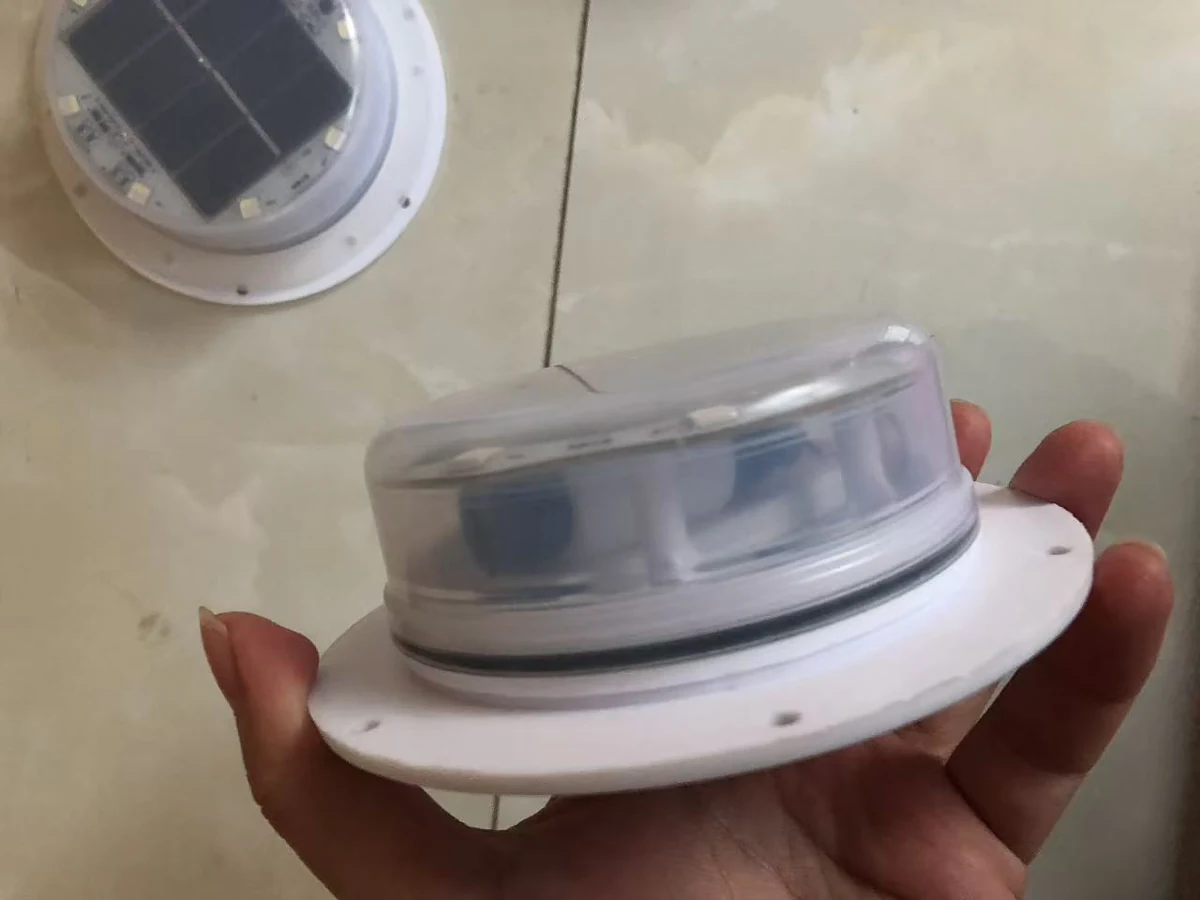
The requirement was a solar module for a decorative garden night lamp.
The buyer asked whether Vcan could supply an LED light with a solar panel for a new decorative garden-lamp application. Follow-up questions focused on the datasheet, module size, charging time and battery working hours.
These are useful questions for selecting an internal lighting module. The finished garden lamp needs to accommodate the mounting structure and leave the solar panel in a position where it can receive daylight. A compact light source alone does not establish that the complete lamp is ready for the intended outdoor installation.
This case concerns the solar lighting module integrated into the buyer's product. It is separate from our solar-versus-induction mixed-order case, which documents a different buyer comparing two charging arrangements.
A 120mm base reference, with the inner body and height shown separately.
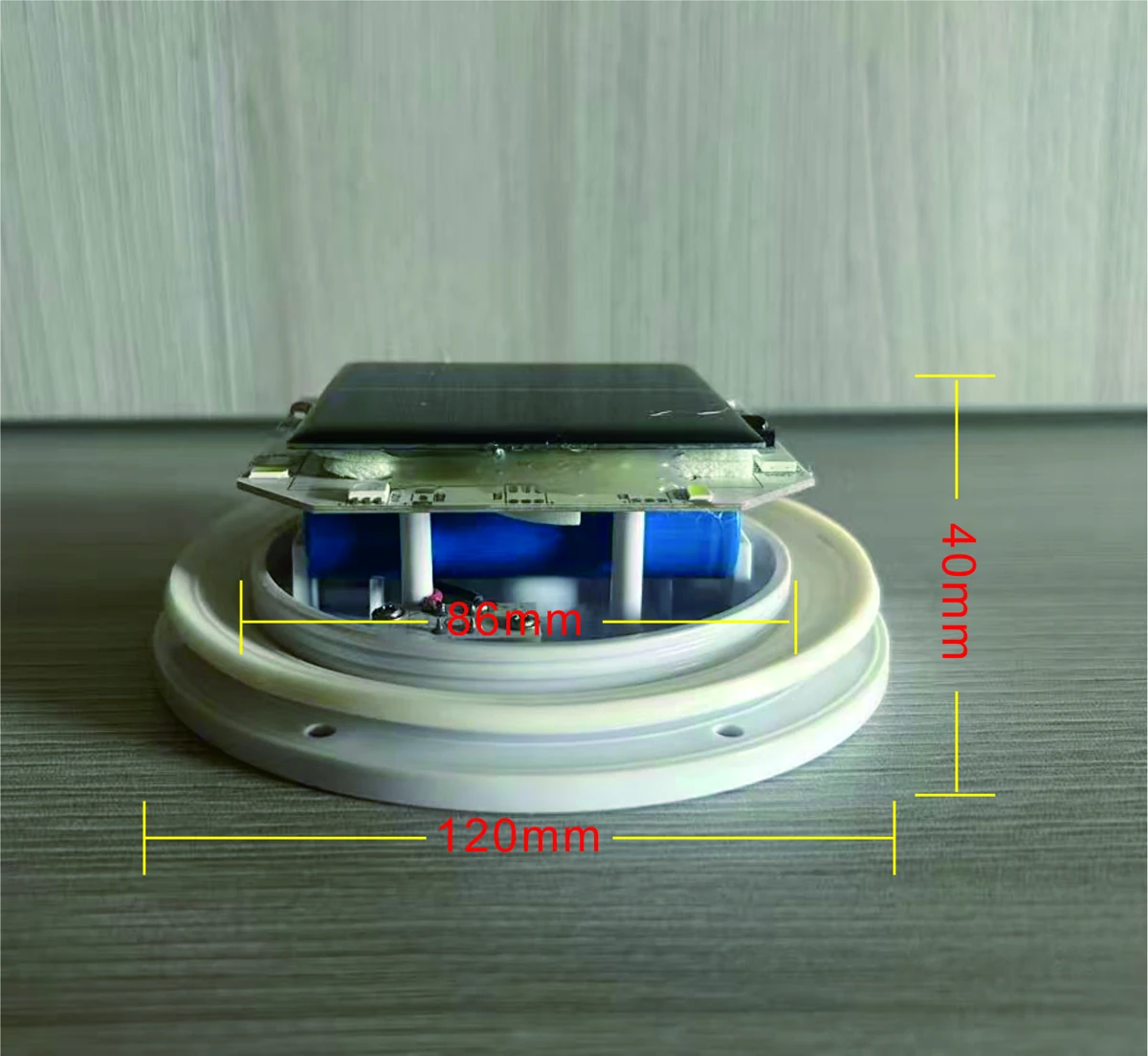
The 120mm outer-base marking is different from the 86mm inner/body reference. The photograph also marks a 40mm height reference for the illustrated assembly. Do not use one number as a substitute for the opening diameter, flange seating area or available internal depth.
Before sampling, send the opening dimensions, fixing details, wall thickness and space above the module. The solar panel and light output both need to suit the surrounding lamp structure. For broader mechanical checks, see our LED module mounting guide.
Charge during the day and use the light at night.
Vcan confirms that this project charges during the day and works at night. Evaluate it in the position and housing intended for the garden lamp, including how the product structure affects the solar panel's exposure.
The buyer asked for charging and working hours, but no measured duration and test setting are stated in this case. The confirmed outcome is that the 10 samples passed the customer's evaluation and a 200-unit order followed. For your project, agree the required night-use period and check it with the selected colour, brightness and installation position.
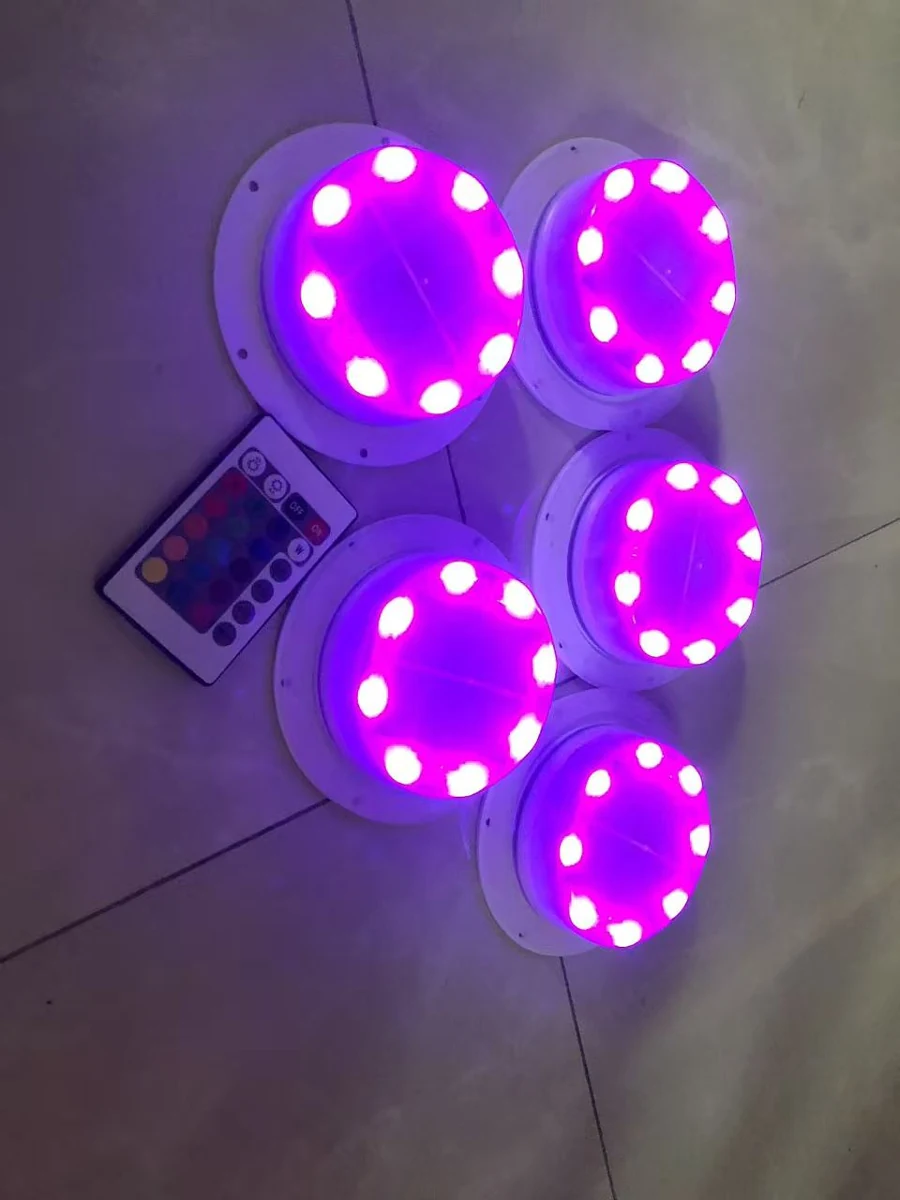
Why the IR remote can be inactive in certain states.
The engineer's note explains a specific control program for this solar configuration. It uses whether solar input is effective to control the light, microcontroller and infrared receiver.
| Condition | Light and controller | IR remote behaviour |
|---|---|---|
| Solar input remains effective for more than 1 second | The light is off and the microcontroller sleeps | IR receiver power is off; remote commands are not received |
| Solar input remains ineffective for more than 1 second | The microcontroller operates | IR receiver power is on; remote control is available unless the off-state sleep condition below is reached |
| Solar input is ineffective and the light remains off for more than 30 minutes | The microcontroller enters sleep mode | IR receiver power is switched off |
| The module has entered that off-state sleep mode | Solar charging is required to wake it | The engineer’s note specifies solar charging as the wake-up condition |
In practice, a remote that does not operate the lamp while solar input is effective can be consistent with this program. A different situation occurs if the lamp remains off for more than 30 minutes while solar input is ineffective: the receiver is then powered down and solar charging is required to wake the module.
Test this sequence with the sample and include the agreed behaviour in the finished product's instructions. These settings describe the engineer-confirmed configuration here; confirm the control program for a new order. The note does not specify an illumination threshold or establish a separate automatic switch-on sequence.
Ten samples passed testing, followed by a 200-unit order.
Vcan's sales team confirms that the customer first purchased 10 sample sets. After testing, the customer placed an order for 200 units. The customer also expressed an intention to stay in contact and continue ordering.
The sample evaluation and larger order show how the buyer moved from an initial garden-lighting enquiry to selecting the solar module for the project.
For a new application, use the sample stage to check mechanical fit, panel exposure, light effect, charging and the actual remote-control sequence together. Our LED module sample testing checklist can help organise that review.
Frequently asked questions
Can a solar LED module be used inside a decorative garden lamp?
Yes, a buyer in this case selected solar LED modules for decorative garden night lamps, tested 10 samples and then ordered 200 units. Review the module fit and the panel’s access to daylight in your own lamp before approving the configuration.
Does this module charge during the day and work at night?
Yes. Vcan confirms daytime charging and nighttime operation for this project. The engineer’s control note also explains when solar input disables the light and IR receiver, and how the off-state sleep mode is entered and cleared.
Why does the remote not operate while solar input is effective?
For this configuration, effective solar input lasting more than one second turns the light off and removes power from the IR receiver while the microcontroller sleeps. The remote is therefore inactive in that state.
Why can the remote stop responding after the lamp has been left off at night?
If solar input is ineffective and the light remains off for more than 30 minutes, the engineer’s specified program turns off the IR receiver and puts the microcontroller to sleep. Solar charging is needed to wake the module from that state.
What do the 120mm, 86mm and 40mm markings refer to?
The supplied photograph marks a 120mm outer base, an 86mm inner/body reference and a 40mm assembly-height reference. Check a dimensioned drawing and the final assembled sample for the exact opening, fixing and cover clearances; the three markings are not interchangeable installation dimensions.
How many charging hours and working hours are confirmed?
This case confirms daytime solar charging, nighttime use and a successful sample evaluation followed by a 200-unit order. It does not state measured charging hours or a runtime under a specified light setting. Agree the required operating hours and test the sample in your intended garden-lamp position.
Start with your lamp and its intended use
Developing a decorative solar garden lamp?
Send a drawing or clear photos, opening and mounting dimensions, planned panel position, required lighting effect, desired working hours and quantity. Tell us how users should switch and control the lamp.
Vcan can review a suitable solar LED module configuration and agree what the sample needs to demonstrate.