
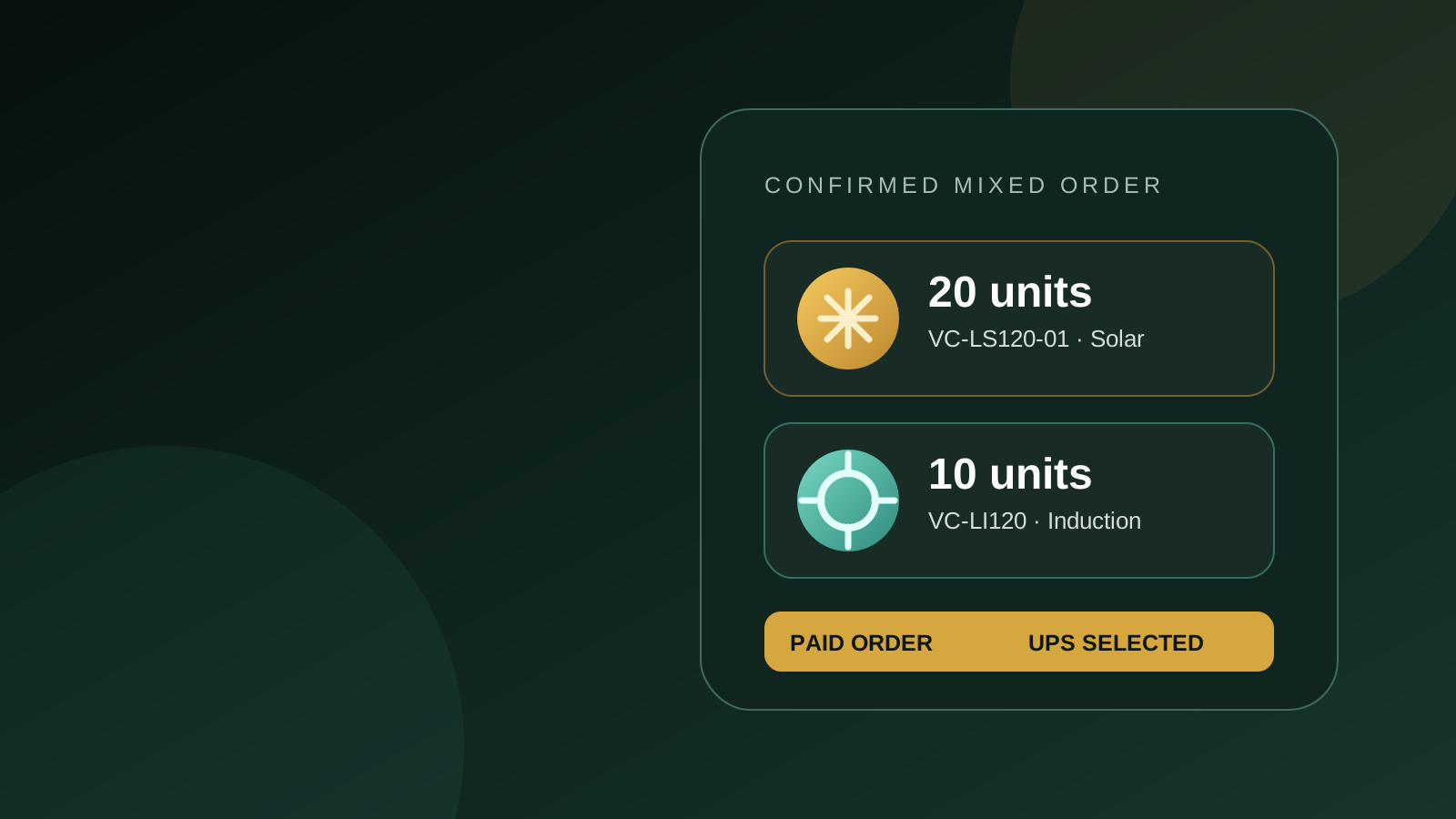
Real mixed-order case
How an Italian Buyer Built a Mixed 30-Unit LED Module Order
An inquiry for 20 solar modules expanded to include 10 IP68 induction-charge modules after the buyer reviewed shipping capacity.
An Italian buyer first requested a quotation for 20 VC-LS120-01 solar RGBW LED modules. After asking whether the quoted shipment still had unused weight or volume capacity, the buyer added 10 VC-LI120 IP68 induction-charge moduleswith EU adapters.
The final mixed order contained 20 solar-charge modules and 10 induction-charge modules: 30 units in total. The information available confirms the order and payment. It does not establish production, shipment, delivery or long-term field performance.
Project details
A solar-module inquiry became a two-configuration order.
The initial request focused on unit price, shipping cost to Italy, estimated delivery time, total amount, payment methods and whether each solar module would be supplied ready to use with its rechargeable battery and remote control.
| Buyer | Italian business buyer (identity withheld) |
|---|---|
| Initial inquiry | 20 × VC-LS120-01 solar RGBW LED modules |
| Added product | 10 × VC-LI120 IP68 induction-charge LED modules |
| Final quantity | 30 LED modules across two configurations |
| Adapter | EU adapter specified for the VC-LI120 sets |
| Shipping review | Package weight, volume and available capacity within the quoted rate |
| Delivery methods | Buyer compared available freight, sea and express options, then selected UPS |
| Confirmed status | Mixed order paid; production and shipment status not stated here |
Shipping capacity
The buyer looked beyond the freight total.
Rather than accepting or rejecting the original shipping price on its own, the buyer asked for the maximum weight and package volume allowed within the quoted rate. The buyer also requested the approximate packed weight and dimensions of the original 20-unit order, then asked how much additional capacity remained.
This is a practical B2B purchasing question because carriers may charge by actual gross weight, volumetric weight, a minimum charge or a rate break. Adding useful products can reduce the freight cost per unit, but only if the final carton plan remains within the same chargeable bracket. It should never be assumed before packing data and carrier rules are checked.
The buyer later requested a comparison of available freight, sea and express options, then selected UPS for this order. UPS is recorded as the chosen carrier; the information available does not establish that the shipment has already been dispatched.
20-unit solar configuration
VC-LS120-01 uses solar-assisted charging.
The ordered VC-LS120-01 platform is listed with an 800 mAh rechargeable battery, 2.6 W power, 8 RGB plus 8 white LEDs and an IP65 module rating. Solar charging performance depends on light exposure, panel orientation, weather, brightness mode and the way the module is integrated into the finished product.
10-unit induction configuration
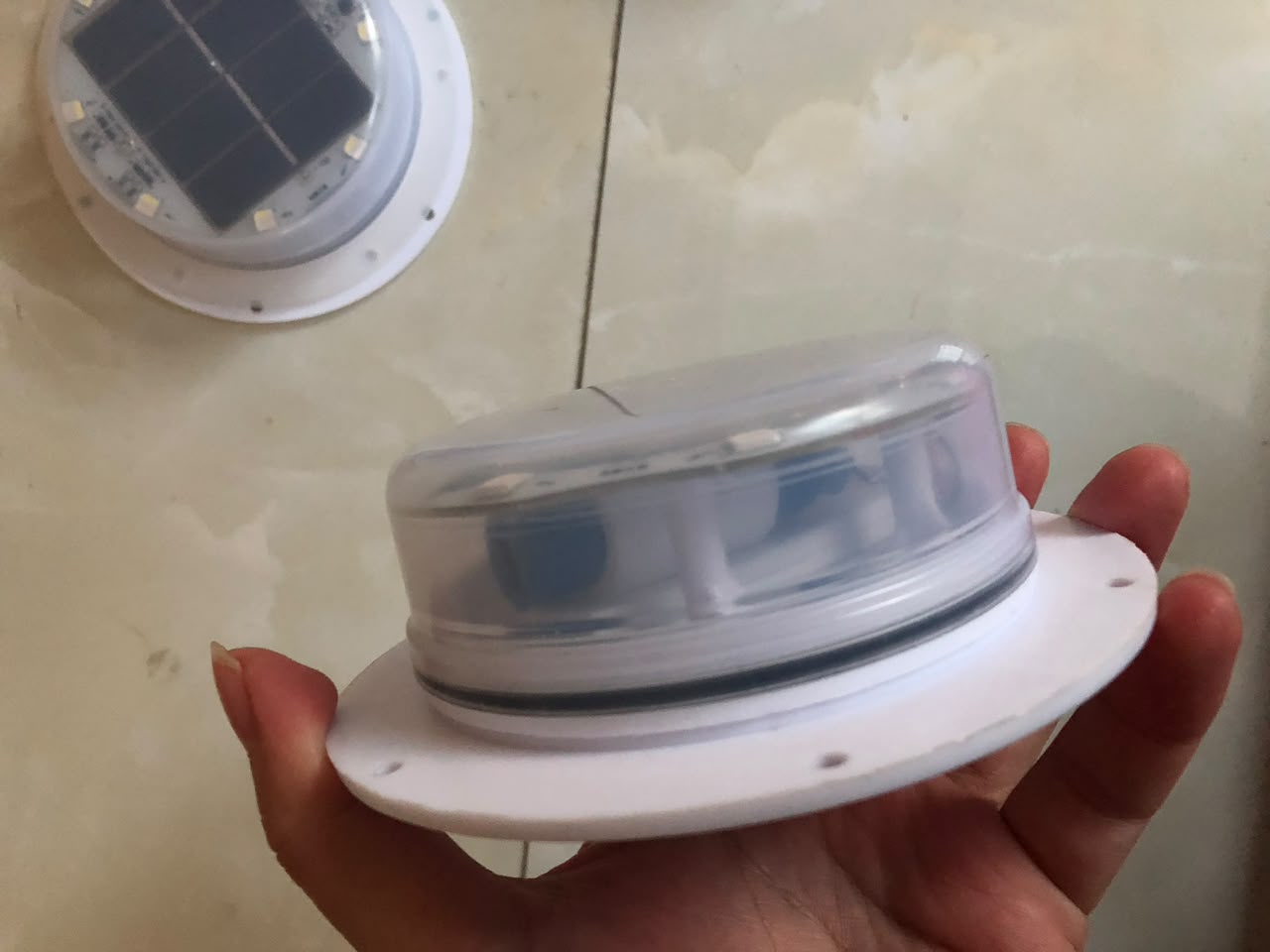
VC-LI120 provides a sealed IP68 charging architecture.
VC-LI120 is listed with a 2,000 mAh battery, 3.8 W power, 18 RGB plus 18 white LEDs and an IP68 module rating. Induction charging avoids an exposed charging connector on the sealed module, but the charging-base location, adapter standard and complete product installation still need to be planned.
Configuration comparison
Same nominal diameter, different charging priorities.

| Decision point | VC-LS120-01 | VC-LI120 |
|---|---|---|
| Ordered quantity | 20 units | 10 units |
| Module diameter | 120 mm | 120 mm |
| Charging | Solar-assisted charging | Induction charging |
| Waterproof rating | IP65 module rating | IP68 module rating |
| Battery | 800 mAh | 2,000 mAh |
| Power | 2.6 W | 3.8 W |
| LED configuration | 8 RGB + 8 white LEDs | 18 RGB + 18 white LEDs |
| Order-specific detail | Solar version requested | EU adapter specified |
These specifications explain the technical difference between the two platforms, but the correspondence does not state the buyer's final application for each model. It would be inaccurate to invent a use case that the buyer did not provide.
For a broader comparison of charging access, sealing and maintenance, see the direct-charge versus induction-charge guide.
Buyer lessons
Optimise the shipment without losing configuration control.
A mixed order can make better use of a shipment, but each SKU still needs its own confirmed quantity, charging system, adapter, remote, accessories and packing details. The final commercial comparison should use the packed shipment rather than product-only weight.
Before confirming a shipping method, compare carton count, gross weight, dimensions, chargeable weight, estimated transit time, delivery terms and total freight cost. Sea and express services solve different priorities, and the cheapest quoted method is not automatically the best fit for every deadline.
Planning a mixed LED module order?
Send the model numbers, quantities, adapter standard, destination and required delivery time. We can review the configurations and prepare the packing information needed for a shipping comparison.
Questions
Charging choice and shipping planning.
Why did the buyer add a second LED module to the shipment?
After receiving the shipping quotation, the buyer asked how much additional weight or volume could be included without increasing the quoted rate. The follow-up order added 10 VC-LI120 induction-charge modules to the original 20-unit solar-module request.
Is solar charging always better than induction charging?
No. Solar charging depends on exposure, orientation, weather, brightness mode and product integration. Induction charging is useful when a sealed IP68 module and a dedicated charging base better suit the application. The correct option depends on the finished product and operating environment.
Can mixed LED module models share one shipment?
Yes, when the packing plan, gross weight, carton volume, accessories and customs documents are reviewed together. The carrier's chargeable weight and rate break must be confirmed before promising that added goods will not change the freight cost.
What should a buyer request in a shipping comparison?
Ask for carton count, gross weight, package dimensions, chargeable weight, estimated transit time, delivery terms and the total delivered or freight cost for each available method.
Customer identity, prices and contact details are withheld. This case documents the confirmed inquiry sequence, paid order quantities and selected UPS carrier without claiming production, dispatch, delivery or an application that the buyer did not confirm.