
Real lamp project · custom VC-LI85
Warm White Not Warm Enough in Your Lamp?
A customer wanted a warmer effect through a white-glass lamp. The final Vcan module configuration offered three warm-white settings across 2200K–3000K, with separate brightness adjustment.
See the supplied configuration →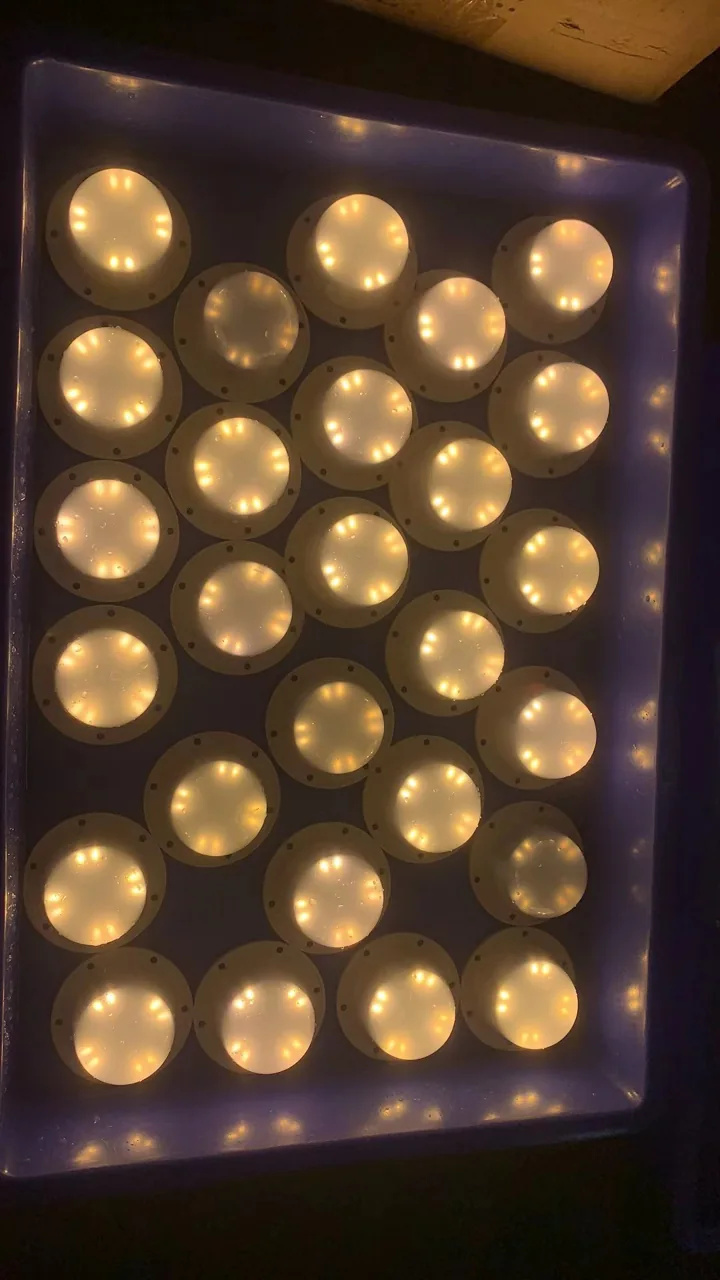
If a warm-white LED module does not give the appearance you want inside your lamp, start with the finished product and the effect you need. Confirm the white-light range, whether fixed or stepped settings are needed, and how users should adjust brightness. Then review a suitable module configuration and test the sample in the intended housing.
“It looks too cool with our white glass.”
In this customer's development correspondence, the existing light was described as looking cooler than desired when combined with white glass. The customer wanted a warmer appearance and later discussed selectable warm-white settings as well as brightness levels.
This was feedback about the lamp's appearance—not a measured finding that the glass changed the LED's colour temperature. It was enough to define a practical development question: could the Vcan module offer warmer white-light choices that the customer could evaluate in the product?
The collaboration began with 85 mm induction-charging samples in 2023. The module, matching remote and lighting requirements developed together, followed by repeated orders and an ongoing relationship. This article focuses on the light requirement; the separate custom remote supplied with Vcan modules case covers the interface and artwork.
Final supplied configuration
VC-LI85 with three warm-white settings across 2200K–3000K.
- Module platform
- VC-LI85 · 85 mm · induction charging
- White-light adjustment
- Three selectable colour-temperature settings across 2200K–3000K
- Brightness adjustment
- Separate stepped brightness control with the matched remote
- Supply scope
- Customer-specific Vcan modules with matching controls
- Project history
- Samples from 2023, followed by repeated orders and continuing cooperation
This final delivered range is distinct from the earlier values discussed during development. It is a three-step configuration, not continuously adjustable colour temperature. The intermediate Kelvin target and brightness percentages are not published here; agree each setting for your own project rather than assuming evenly spaced values.
The VC-LI85 product page describes the reference platform. Do not assume that a standard VC-LI85 quotation, remote or sample includes these three warm-white settings. Request the required lighting and control configuration explicitly.
See the actual custom module and controls in operation.
“Warmer” and “dimmer” are two different requests.
A customer asking for a softer-looking lamp may mean a warmer white-light appearance, less light output, or both. In this project, those functions were configured separately so the matching controls could select warm-white settings as well as adjust brightness.
- Colour temperature: specify the warmer and less-warm endpoints, the number of settings and the target for each step. The 2200K–3000K range in this case stays within warm white; its upper end is not a daylight cool-white mode.
- Brightness: specify the levels and sequence independently. Three colour-temperature settings do not imply three brightness levels.
- Operation: confirm which buttons perform each action and test the actual module and remote together.
A printed warm-light symbol cannot add adjustable colour temperature to an unsupported fixed-white module. The LED configuration and control program must support the intended response. If the first decision is white-only versus colour-changing light, start with choosing white-only or RGBW LED modules.
Approve the effect in your lamp—not just the bare module.
Use the intended glass or translucent housing when reviewing the sample. Check the available white-light settings and brightness levels from the viewing positions and under the ambient conditions relevant to the product. Tell Vcan what you want changed in the finished lamp, rather than simply asking for “more yellow.”
- Show the product: provide a lamp photo or drawing, housing material and available module space.
- Describe the desired effect: identify a fixed white-light target or a required adjustment range, and whether dimming is also needed.
- Try every supported setting: check the light and button sequence with the supplied matching remote in the intended housing.
- Keep an approval record: record the module version, each agreed setting, controls and accessories. Use the LED module sample testing checklist for the broader fit, runtime and charging checks.
Photos and video are useful for explaining concerns, but camera exposure, white balance and the viewing screen do not provide calibrated colour-temperature or brightness measurements. If exact measured values and tolerances are part of the brief, agree the verification method before sample approval. This case does not publish such measurement results.
For repeat orders, preserve the approved configuration.
The customer has continued ordering several times a year. The useful lesson is not the exact order quantity: it is the need to keep the agreed light settings and matched controls identifiable as the product develops.
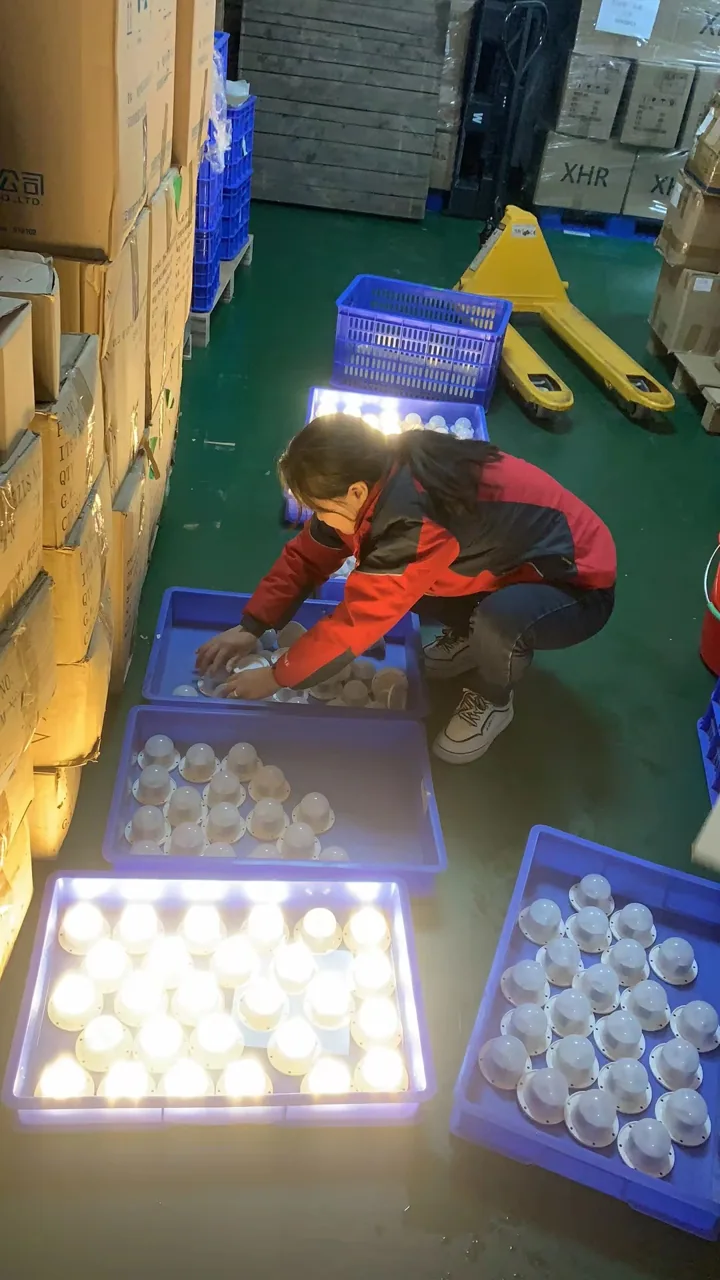
When reordering, identify the approved VC-LI85 custom version, warm-white steps, brightness functions and matching accessories. If the glass, housing, LEDs or controls change, identify the change and review what needs testing again. “The same 85 mm light” alone does not specify every function.
Adjustable warm-white module questions
Can Vcan supply an adjustable warm-white rechargeable LED module?
Supported module configurations can be reviewed for stepped warm-white settings and separate brightness adjustment. In this customer project, the supplied VC-LI85 configuration had three colour-temperature settings across 2200K–3000K. This is a project-specific configuration, not the standard specification of every VC-LI85.
Does three-step colour temperature mean continuously adjustable white light?
No. This project uses three selectable colour-temperature settings, not continuous adjustment. Confirm the exact target for each setting and the operating sequence before approving your own sample.
Is dimming the same as choosing a warmer white?
No. Brightness adjustment changes light output; colour-temperature adjustment selects a warmer or less-warm white appearance. Specify the two functions separately and confirm them on the matched module and controls.
Can a custom remote make any fixed-white module colour-temperature adjustable?
No. The LED configuration and control program must support adjustable white light. The remote must be matched to that configuration; changing the artwork alone does not add the function.
Can the photos or video verify the Kelvin values?
No. These are project visuals and a functional demonstration, not calibrated colour-temperature or brightness measurements. Confirm the agreed specification and evaluate a sample in the intended lamp housing.
Develop the light around your product
Need a warmer, dimmable module for your lamp?
Send the lamp or housing, available module space, target warm-white settings, required brightness control and order quantity. Vcan can review a suitable rechargeable LED module and matching controls before sampling. This is a module project, not a standalone remote-control service.