OEM development · module and charger integration
Developing a Custom LED Module and Induction-Charging Dock
Vcan can review a custom rechargeable LED module, its charging dock and its controls as one system. Start by checking an existing platform; where the product requires more, define the mechanical, electrical and tooling work before committing to production.
This guide explains what a buyer and development team should decide, sample and approve when creating an induction-charging RGBW light unit.
Choose between a standard platform, a changed configuration and a new design.
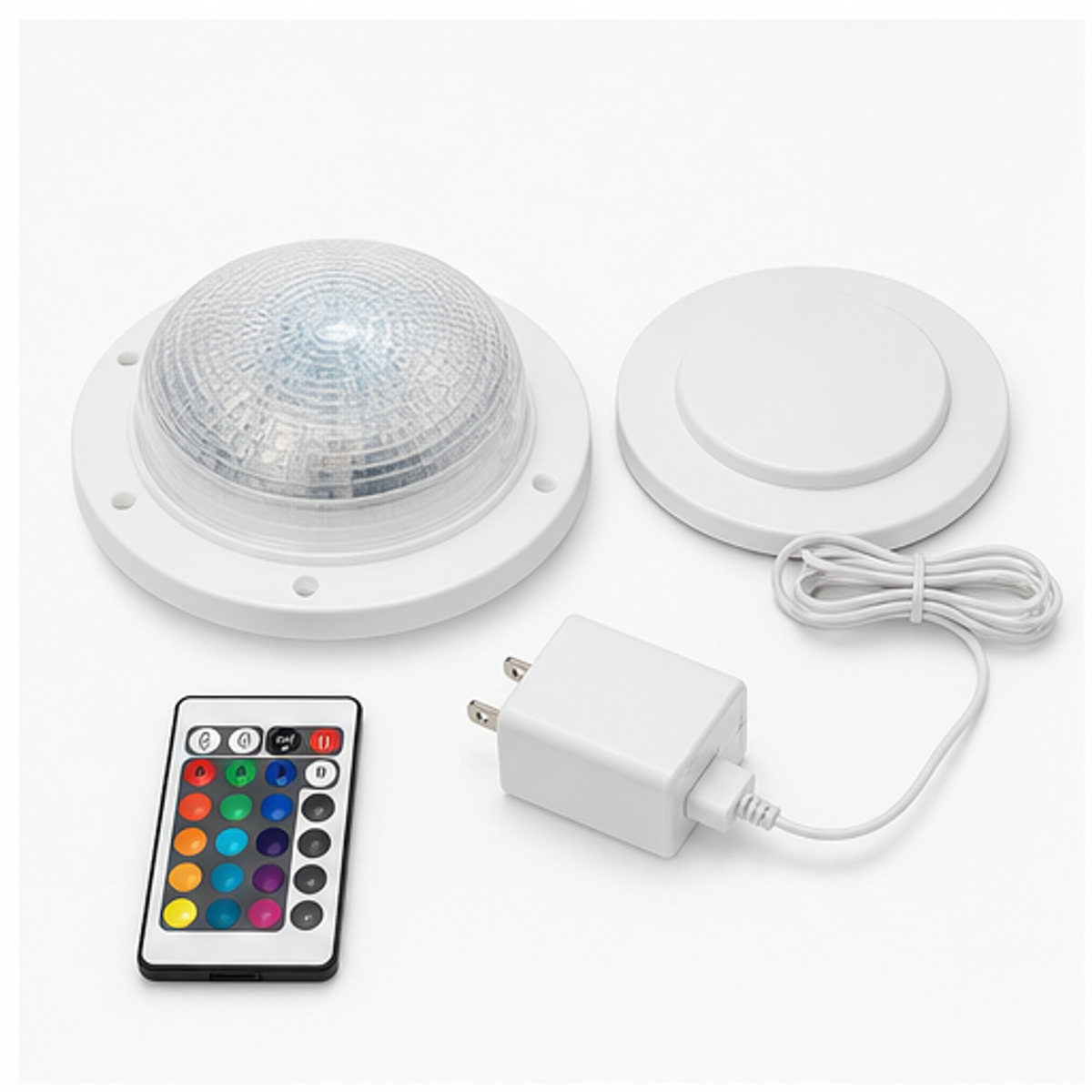
A custom project does not always need a new mould. First check whether a standard rechargeable light engine can meet the available space and intended light effect. If it can, sampling that platform helps establish which changes are necessary.
For an induction-charging reference, see VC-LI120 and its matched charging base. If accessible plug-in charging suits the product, compare the VC-LN120 direct-charge platform. These are different starting points, not interchangeable chargers or guaranteed fits for every housing.
| Starting point | Development scope | What to confirm |
|---|---|---|
| Existing platform fits | Evaluate the standard module and its matched charger in your product. | Sample fit, light effect, charging access and the required accessories. |
| Existing platform needs changes | Review battery, white-light choice, LED layout, controls or mounting requirements. | A defined configuration and a sample representing the changes. |
| The product needs a new enclosure or dock | Review mechanical design, electronics integration and dedicated tooling as one development scope. | Agreed drawings, functional and assembly checks, tooling scope and production acceptance criteria. |
Define the limits before selecting the battery or designing the dock.
Send the usable internal space, opening, fixing arrangement and a section drawing where possible. Mark the dimensions that are fixed and the areas that can change. A light may fit through an opening but still leave insufficient room for its cover, mounting, wiring or charging arrangement.
Describe the actual operating cycle: how the product is switched on, which colours or white-light settings matter, how long it must run and how it is returned for charging. Include indoor or outdoor use, likely cleaning and storage conditions, target markets and expected quantities.
Separate required performance from preferences. For example, a fixed enclosure, a particular light output and a long runtime may compete for the same internal space. Establishing priorities lets the team assess realistic options instead of quoting an isolated battery capacity.
Review the enclosure, light, battery and charging base together.
Mechanical fit and light distribution
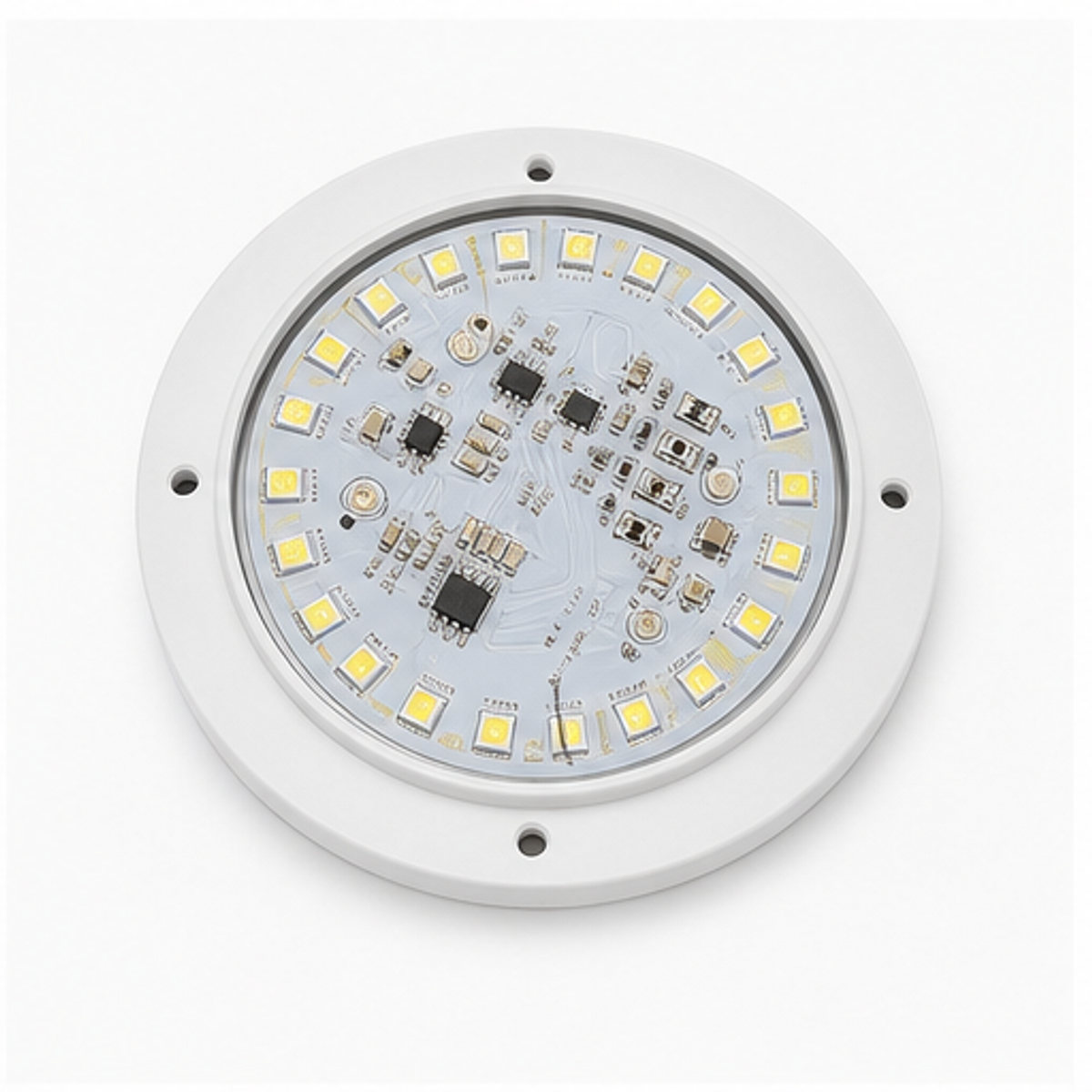
The internal assembly needs room for the board, battery, fixings and cover. Review it inside the finished product, including its diffuser or translucent shell. A module that looks bright on the bench may produce a different effect inside a thick, coloured or tall housing.
Battery and working time
Specify a working-time target together with brightness and operating mode. Battery capacity, available space and light output need to be considered together. Record the conditions when testing samples so that a later change in brightness, electronics or battery does not silently change the performance being approved.
Induction charging and controls
Review the receiver, charging pad, alignment, enclosure and power supply as a matched arrangement. Evaluate charging with the intended product assembled. The detailed charging gap and alignment guide covers that integration question.
Define control behaviour separately from the charging method. Ask which user actions are needed, whether white light is separately selected and whether multiple lights must operate together. Suitable RF, IR or other control options need configuration-specific review; induction charging alone does not determine the control system.
Agree what each development stage is meant to establish.
Use the following framework when discussing a new module and charging dock. The exact sequence, sample scope and deliverables should be agreed for your project.
| Stage | Questions to resolve | What to agree |
|---|---|---|
| 1. Define the application | Identify the available space, housing material, environment, light effect, working time and charging routine. | An agreed brief separating fixed requirements from preferences. |
| 2. Select the starting platform | Compare a standard induction module with configuration changes or a new mechanical design. | The proposed module, charger and accessory scope. |
| 3. Review the complete assembly | Consider the battery, PCB, diffuser, mounting, charging alignment and service access together. | Drawings and the questions that need physical samples. |
| 4. Evaluate samples | Check control behaviour, light effect, fit and charging in the intended product. | Recorded results, required revisions and remaining checks. |
| 5. Confirm tooling where needed | Review the mechanical definition and what the tooling quotation covers. | Approved drawing revisions and an agreed mould-sample review. |
| 6. Prepare for production | Confirm the selected components, document scope, instructions, accessories and packaging. | An approved sample and an agreed batch specification. |
Approve the right sample before committing to tooling and bulk production.
A functional sample can help evaluate the lighting and controls. A mechanical prototype can help assess fit and assembly. Neither should be assumed to represent every aspect of the finished product unless that is its agreed purpose.
Where a new mould is needed, discuss the housing parts included, the drawing revision, materials, appearance, markings and the process for reviewing samples from the mould. Resolve ownership, costs, permitted changes and responsibilities in the project agreement.
For sample evaluation, check the assembled light effect, user controls, mounting, charging and working time. Record what is accepted, what needs revision and what remains untested. Use our LED module sample testing checklist for the detailed evaluation steps.
Include CE, RoHS, waterproof and battery documents in the development plan.
Vcan provides CE, EMC, LVD, RoHS and waterproof records within the model and test scope stated in each applicable document, together with supporting battery and adapter records. A new housing, control system or component configuration needs its own scope review; existing certificates should not simply be transferred by changing a model name.
For a practical, public reference, our quality-page document register identifies Vcan LED-light EMC record BD17045624 / BD-EMC176751 and RoHS record BD17045625 / BD-ROHS176752. Their stated scope covers VC-L120 and the series identified in the documents. These records show the documentation available for review; they are not blanket approval of every new custom module.
Battery documentation can include applicable safety records, MSDS/SDS and UN38.3, along with the transport paperwork relevant to the selected battery and shipment. The module, battery, charging base and adapter should be identified clearly in the document request.
We maintain the applicable files and coordinate required updates with suppliers and laboratories. Send your importer's or agent's checklist so the current document pack can be matched to the actual order. See the certificates and battery shipping documents guide for more detail.
Turn the approved development into a clear production specification.
Before bulk manufacture, agree the sample and drawing revision, selected components, required light and control functions, charging equipment and applicable documentation. Define the accessory set, instructions, labels and packaging as well as the module itself.
Discuss the batch checks and how later changes will be reviewed. A battery, power supply or control substitution can affect more than purchasing cost, so evaluate its effect on the agreed performance, fit and document scope before accepting it.
A useful development brief connects your product, the rechargeable LED light unit, the matched charger and the acceptance requirements. This makes the quotation, sample review and production discussion more concrete.
Frequently asked questions
Can Vcan develop a custom rechargeable LED module and charging dock?
Vcan can review the mechanical fit, battery, LED arrangement, charging and control requirements together. The scope may be an existing platform, a changed configuration or a new housing and matched dock. Drawings, samples and tooling requirements should be agreed for the particular product.
Does every custom module need a new mould?
No. Start by checking whether an existing module fits the product. A new enclosure or mounting arrangement may require dedicated tooling, while some electrical or control changes can be reviewed without a completely new housing. Confirm the actual scope before ordering tooling.
Can the external dimensions remain fixed?
Provide the maximum available space and identify which dimensions cannot change. Battery capacity, PCB layout, cover clearance and charging geometry then need to be assessed within that space. A nominal diameter alone does not establish that the assembly will fit.
Can I use a different induction charger with the module?
Do not assume compatibility. Review the light, induction base and power supply as a matched arrangement. The sample should be evaluated with the charger and product housing intended for supply.
Can RGBW light output and remote operation be customised?
RGB and white-light options, brightness, LED layout and suitable control options can be reviewed for the chosen module. Describe the required user actions and whether lights operate individually or together. Availability and sample testing depend on the selected configuration.
How should we specify battery working time?
State the required hours, brightness, colour or white-light mode, operating environment and charging routine. Confirm working time on the agreed sample under recorded conditions. Capacity alone is not a reliable comparison between modules with different light output.
Which CE, RoHS and battery documents can we request?
Vcan provides product and supporting component records within their stated scope, including applicable CE, EMC, LVD, RoHS, waterproof, battery and adapter documentation. MSDS/SDS and UN38.3 records can be reviewed for the selected battery and shipment. A new custom design must be checked against the actual scope of those files.
What should be agreed before bulk production?
Confirm the sample and drawing revision, selected components, light and control behaviour, charger and adapter, applicable documents, instructions, packaging and batch checks. Record any unresolved item rather than treating an early prototype as the complete production specification.
Custom rechargeable LED module development
Send the product brief before choosing the final module.
Share drawings or photographs, available space, light effect, required operating hours, charging and control preferences, target markets and quantity. We can review the starting platform and the development work needed for your product.