
Custom development · prototypes · mould tooling
Developing a Custom LED Module Inside a Ring-Handle Housing
Vcan can develop a custom rechargeable LED module and its surrounding housing when a standard light unit does not fit the product. In this project, the brief was to integrate lighting electronics into a ring handle and supply them as one assembled unit, ready to connect to the customer's outer globe.
Our engineers developed three structural solutions, made physical prototypes and completed dedicated tooling and assembled samples. The handle housing was designed around the module's mounting, sealing, charging and controls.
Project status: moulds and finished assembled samples completed; awaiting customer confirmation.
1. Define the complete assembly Vcan needs to supply.
The customer needed an assembled ring handle with rechargeable lighting electronics and a sealing arrangement, ready to fit a separate decorative globe. Vcan took responsibility for developing the module's integration into that handle housing.
The handle moved toward injection moulding, while the customer's outer globe remained rotationally moulded. The module assembly therefore needed to suit both the handle's manufacturing process and the globe's connection.
| Part of the product | Development responsibility |
|---|---|
| Ring handle and lighting base | Vcan's mechanical proposals, prototype work, tooling and sample review |
| Rechargeable lighting unit | Integration of electronics, controls, charging access and diffuser within the agreed assembly |
| Outer decorative globe | Customer-produced shell; its connection to the handle required joint review |
Starting from the customer's shape and dimensional references, Vcan developed the construction, assembly interfaces and tooling approach.
2. Treat the handle, electronics and globe as two connected interfaces.
Our engineers separated the problem into two connections: handle to lighting electronics, and completed lighting assembly to outer globe. A secure connection at one interface would not resolve a mismatch at the other.
Early discussions considered an internal retaining groove for the light and engagement features around the handle edge for the globe. Three retaining positions were proposed for the outer-shell connection. The customer also requested a release angle for later disassembly and maintenance.
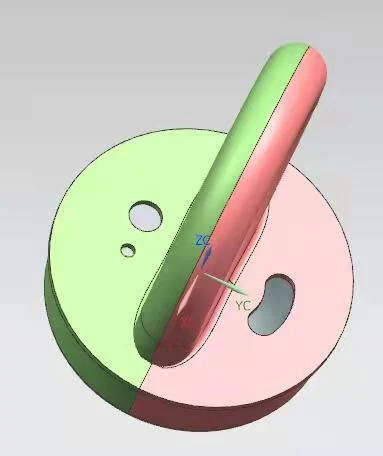
The result was a review of retention and service access together. Our LED module mounting guide explains related fit questions for standard products.
3. Use a physical prototype to expose an alignment problem.
A handmade 3D prototype revealed a practical weakness in the first approach. The existing light had a recessed underside, leaving an offset between the light's centre bottom and the handle base. The charging opening and switch therefore could not meet the handle surface as intended.
Our engineers responded by developing alternative handle-and-base constructions. For this OEM portable lamp lighting system, the prototype changed the design direction before mould manufacture.
4. Compare three construction routes before committing to tooling.
Vcan developed three alternatives and supplied prototype photographs and short assembly demonstrations so the customer could compare the physical arrangements.
| Route | Proposed construction | Finding and decision |
|---|---|---|
| 1. Retain the original module arrangement | Combine the existing light with the proposed handle construction. | The recessed underside caused the control and charging alignment problem. This was not the preferred route. |
| 2. Redesign the handle and electronics base together | Develop a combined handle/base arrangement with a separate closure and the existing diffuser tooling. | Both teams preferred this direction. The hollow handle joint still needed a realistic sealing and drainage review. |
| 3. Use a rotationally moulded handle | Fix the lighting base from inside the handle, with concealed screws and adhesive sealing. | Offered as an alternative with a higher estimated unit cost; it departed from the requested injection-moulded handle. |
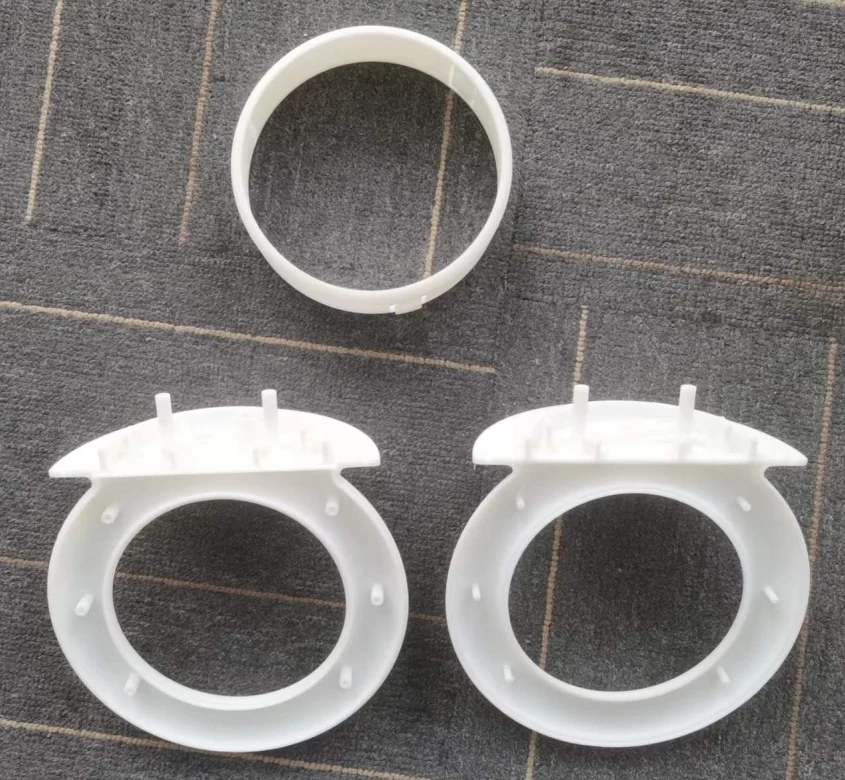
Both teams selected the second route for further development. It brought the module base into the custom handle structure and allowed the existing diffuser tooling to be used.
5. Develop the complete assembly for customer review.
The customer repeatedly requested the complete 3D assembly, including fixing towers, screws, electronic components and sealing parts. They needed to see the unit as it would be supplied and check it against their own outer shell.
The agreed development sequence was drawing review, a 3D sample for evaluation, and then mould manufacture. Samples of the preferred construction were sent, received and positively assessed, followed by further requests for assembly details and icon positions. Revised files and observations were subsequently supplied to progress the tooling.
6. Separate electronics protection from hollow-handle sealing.
Water protection was a central engineering question. Ultrasound joining and waterproof adhesive were discussed for the handle parts, while the lighting electronics needed their own enclosure and sealing arrangement.
For the preferred route, the engineering review raised a limitation: a large, two-part hollow handle could admit water at its joint. A small drain opening was proposed for that space. This is different from allowing water into the electronics compartment.
This separated the lighting compartment's protection from water management in the handle. The customer's rain-resistance requirement then provided the basis for further protection review. See IP65 and IP68 LED module selection for how protection requirements relate to the module and its installation.
7. Confirm the controls, charging access and instructions together.
Early versions considered both a mechanical button and a touch switch. The customer questioned why two holes were needed and wanted clear power and charging icons. Vcan explained the two control options and continued the review around the desired user operation.
Later, the customer asked to offer the product without a remote. Vcan confirmed that operation through the base button was feasible. The positions and visibility of the charging opening, switch and identifying icons then remained part of the physical sample review.
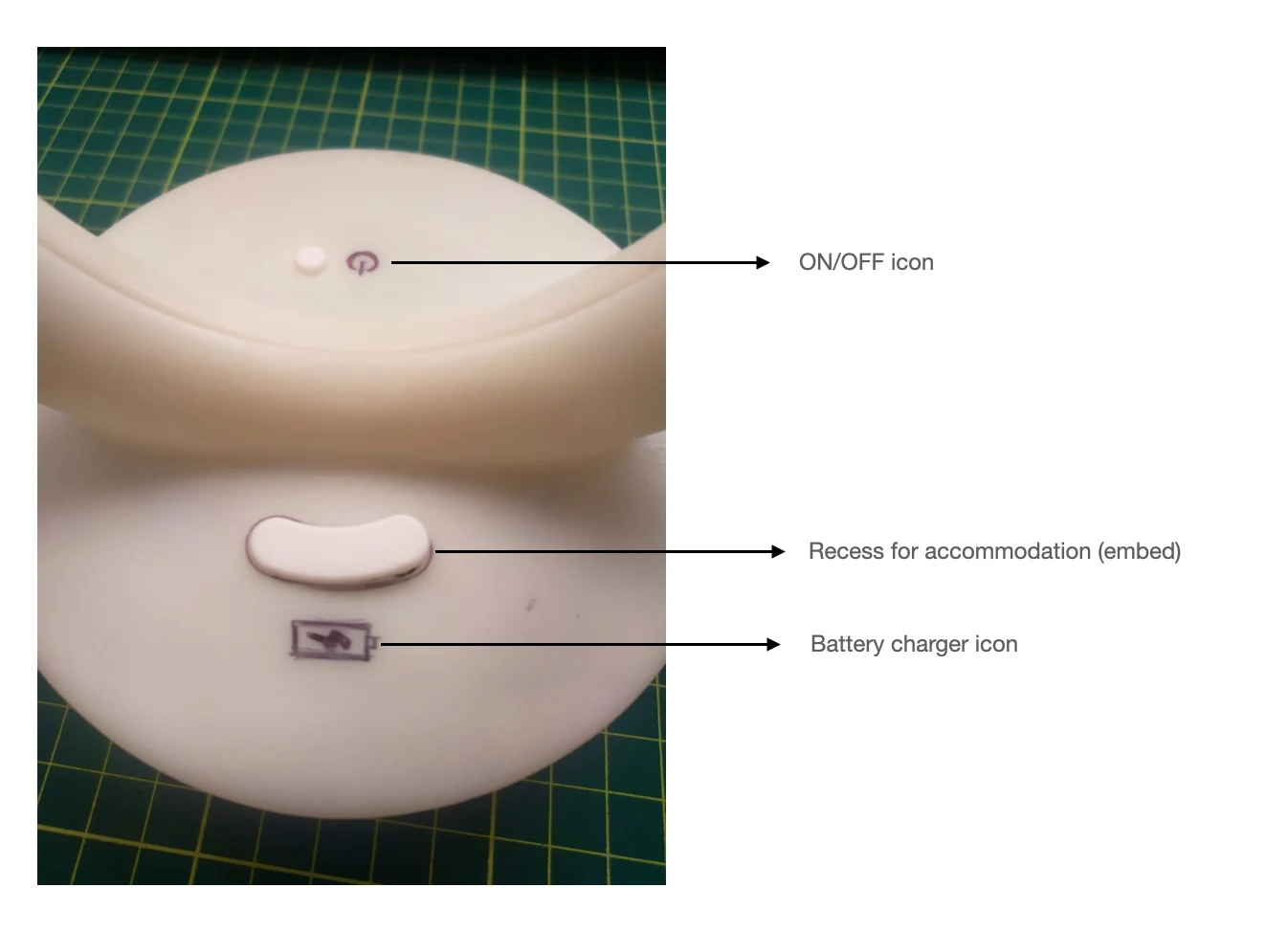
The control discussion connected the electronics configuration to the openings and markings on the moulded housing. Read our button-controlled LED module guide for related configuration questions.
8. Build the moulds and evaluate trial-moulded parts.
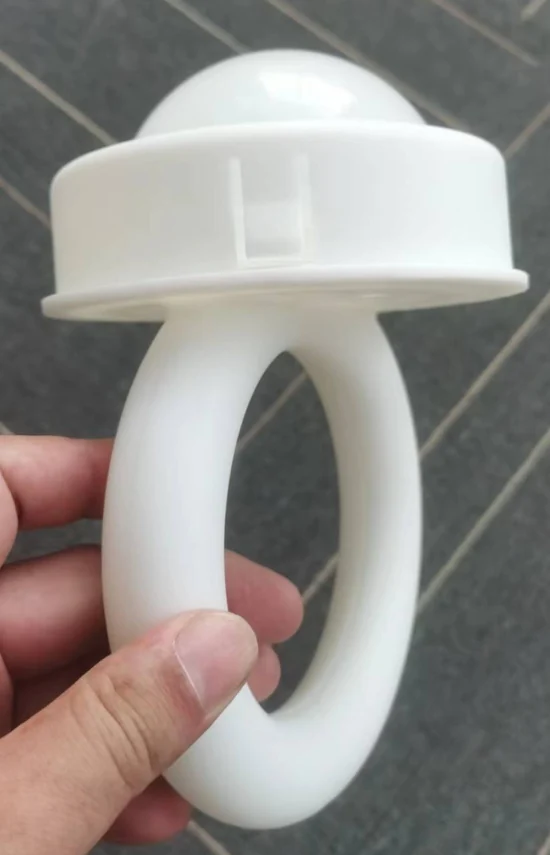
The project progressed beyond drawings and handmade models: the mould tooling has been completed. The development records include mould photographs, trial-moulded handle pieces and assembled samples.
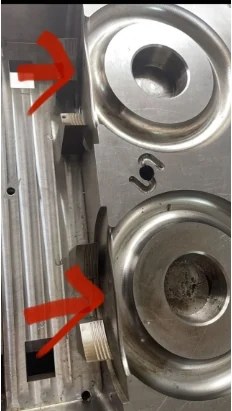
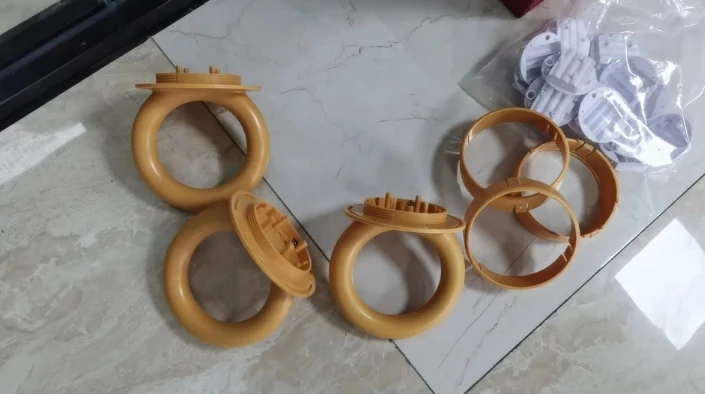
The moulded parts allowed the next review to focus on surface texture, colour and icon definition under the actual manufacturing process.
9. Refine texture, colour and readable icons on real samples.
Balance the requested matte finish with mould release.
The customer wanted a consistent matte appearance across visible areas. For this part's mould-release arrangement, a deeper texture on one surface risked catching during ejection and leaving drag marks.
Vcan worked with the mould factory to compare a lighter moulded texture with abrasive blasting, while considering how to preserve the icons and branding areas. This gave the customer practical finishing options to evaluate.
Check colours at the appropriate sample stage.
The initial request for several colours was refined through sample discussions. The development records include a burgundy appearance sample and a later request for white, unpainted samples, allowing colour and finish to be assessed on physical parts.
Keep the controls recognisable after finishing.
Charging-symbol quality, logo position and icon clarity each led to revisions. A laser-applied logo was suggested during the process; later correspondence accepted removing the logo. Paint was also questioned because it reduced icon legibility, leading to a request to evaluate samples without paint.
The review addressed how the user would recognise the power button and charging point after the housing was finished.
10. Complete the assembled LED module samples for customer confirmation.
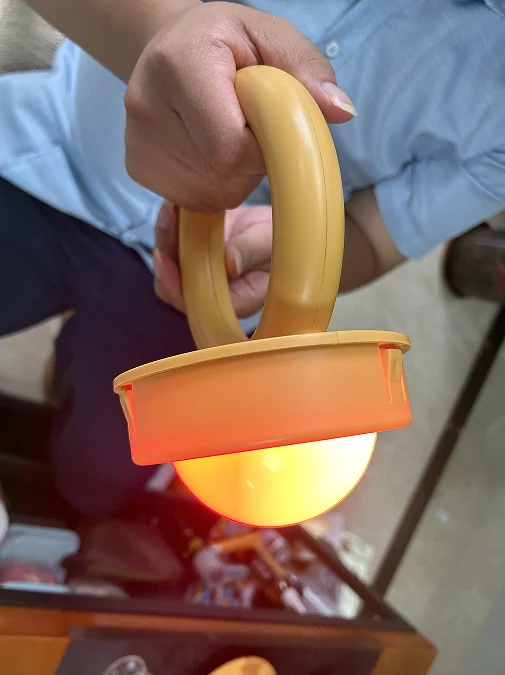
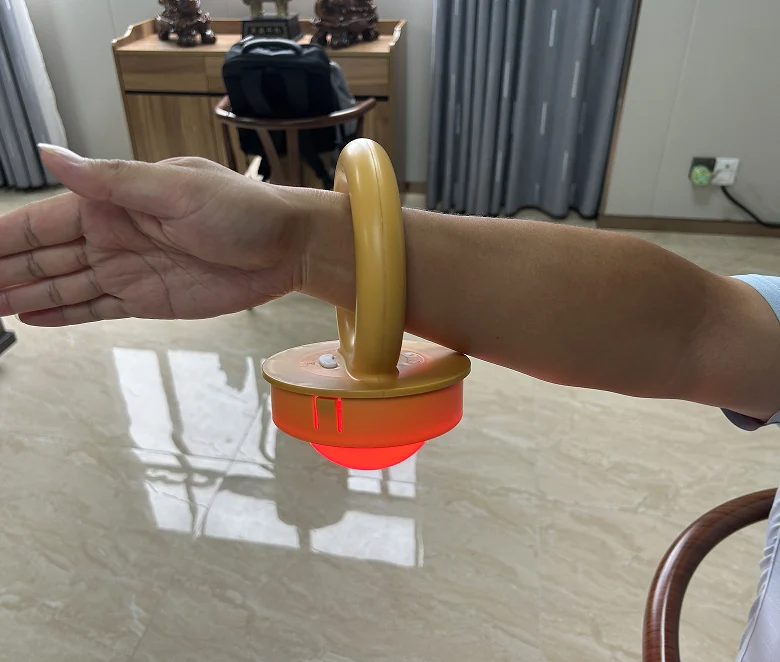
After the moulds were completed, Vcan produced finished assembled samples combining the custom handle housing and LED module. The photographs show the actual samples, including illuminated operation and the fitted diffuser viewed from underneath.
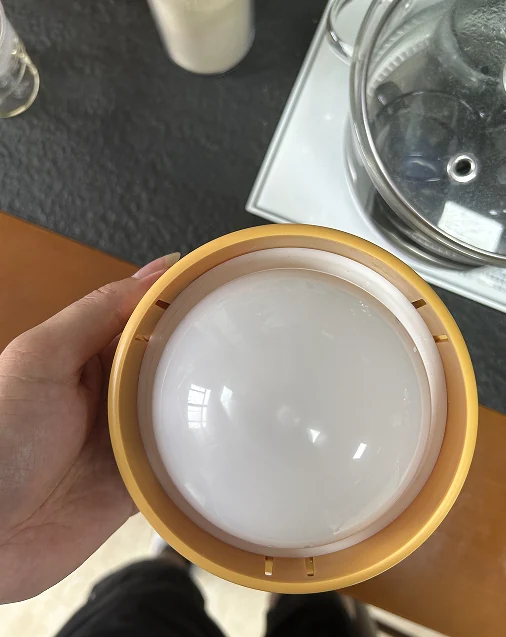
Development results and the next approval step.
| Milestone | Documented position |
|---|---|
| Joint mechanical development | Three construction routes, interface proposals and revised assembly files |
| Physical prototypes | Produced, sent and reviewed; customer feedback informed further changes |
| Mould tooling | Completed for the custom module's handle and housing integration |
| Finished assembled samples | Completed and photographed, including illuminated operation; awaiting customer confirmation |
| Protection rating and production release | The complete custom assembly's final IP rating is unverified; bulk production follows sample approval |
The moulds and finished samples are completed, and customer confirmation is the next step. The project demonstrates Vcan's ability to develop the module's mounting, housing, sealing provisions and controls together, from a reference design to an illuminated assembled sample.
Include compliance and shipping documents in your own project brief.
For a new custom assembly, Vcan can review applicable CE and RoHS records, protection-test requirements, and supporting battery and shipping documents with you. The selected battery's MSDS/SDS and UN38.3 records need to match the supplied configuration. Existing module or component files do not by themselves certify a newly developed complete lamp.
We keep applicable documents updated and arrange required renewals on schedule. Our quality and compliance page explains available document types; the actual scope should be confirmed for your design and destination market.
Frequently asked questions
Can Vcan develop a custom rechargeable LED module with a new housing?
Yes. This project progressed from customer reference geometry through mechanical proposals, physical prototypes and completed mould tooling. The work covered the handle, electronics integration, fixing interfaces, charging and button access, and sample finish. The moulds and finished assembled samples are completed; customer confirmation is pending.
Do I have to use an existing LED module enclosure?
No. An existing lighting platform can be the starting point, but its enclosure may not suit the product. Here, prototype work exposed a mismatch at the switch and charging interface, leading to a revised handle-and-electronics-base design.
Can you supply the handle and lighting electronics already assembled?
That is the supply scope requested in this project. Vcan developed the handle-and-electronics assembly while the customer retained responsibility for the outer globe. Assembly boundaries and the connection to the customer's shell must be agreed for each project.
Does a sealed LED unit make the whole handle waterproof?
It does not establish the protection of the complete assembly. The electronics cavity, hollow handle joint, controls, charging opening and outer-shell interface require separate review. No final IP rating is claimed for the custom assembly shown here.
Can a custom light work without a supplied remote control?
Yes, button operation without a supplied remote was confirmed as feasible during this project. Specify the required switching and light modes when agreeing your own control configuration.
Why do we need a prototype before opening the mould?
A physical prototype can reveal access and assembly problems that are difficult to judge from an outline. Here, the recessed underside of the existing light prevented the proposed controls and charging interface from aligning with the handle base.
Can the housing colour, texture and icons be customised?
These were all reviewed in this development. The work included colour samples, matte-surface requirements, mould-release constraints and charging and power icon clarity. The chosen finish must be checked on the relevant sample; an early colour or texture proposal is not final approval.
What stage has this custom LED module project reached?
The mould tooling and finished assembled samples are completed. The illuminated samples shown here are awaiting customer confirmation. Bulk production is a separate next stage after sample approval.
Discuss your custom LED lighting assembly with Vcan.
Send your housing drawings or reference photos, available internal space, required light effect and working time, charging routine, controls and water-exposure requirements. Identify the parts you manufacture and the parts you want Vcan to supply assembled.
We can then review whether an existing rechargeable LED module fits, whether its configuration needs changing, or whether the product needs a dedicated housing and tooling. See our OEM development service and sample approval checklist when preparing the brief.