
Portable lamp development · Customer case
A Rechargeable LED Module with Magnetic Fixing for a New Lamp
An Italian customer wanted a ready-made battery light adapted to their lamp, with magnetic fixing and 3000K warm white. Sample development led to approval, an initial 50-set order and ongoing 300- and 500-set repeat orders.
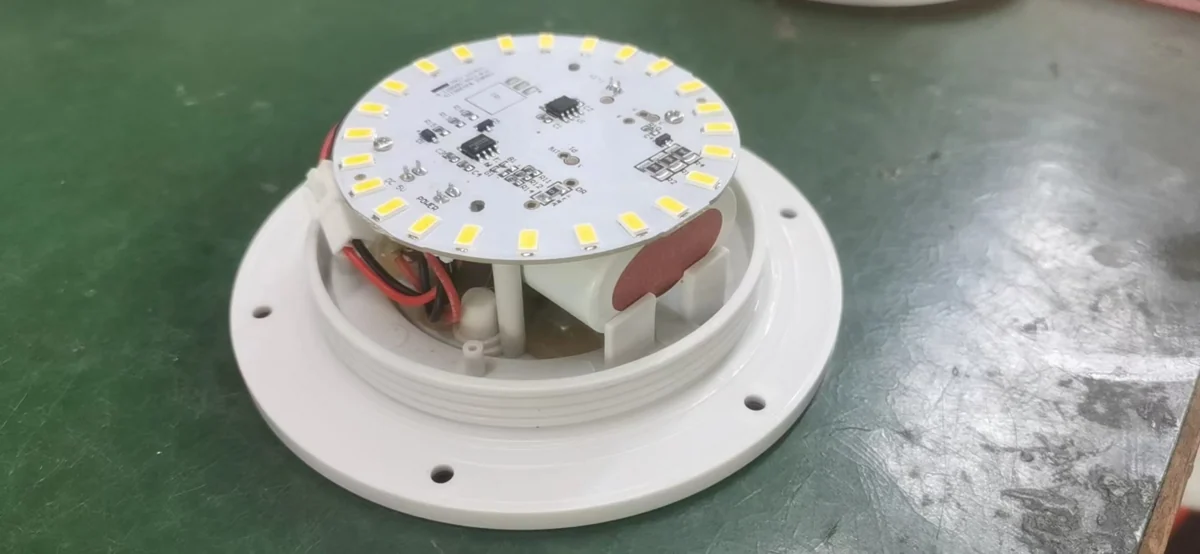
A battery-powered LED module can be customised for magnetic fixing when the module and lamp structure are developed together. In this Vcan project, the customer used the existing 120mm VC-LN120 platform, specified 3000K warm white and tested customised samples. After a charging revision and sample approval, the project progressed from a 50-set first order to continuing orders of 300 and 500 sets.
A new lamp, with less development from scratch
The customer approached Vcan on behalf of a lamp developer in Italy. They were looking for a battery-powered LED light that could be fixed magnetically to the lamp structure. Instead of commissioning a completely new light unit, they wanted to adapt something already available from a supplier to keep development cost down.
The space available was about 110 to 120mm in diameter. Vcan proposed its existing 120mm platform and discussed the housing shape with the customer. That provided a practical starting point, while leaving the colour, battery, switch and magnetic fixing to be confirmed for the actual lamp.
For another lamp maker, the VC-LN120 product page is a starting point for the platform. The configuration in this case was customised: its warm-white LED arrangement and magnetic fixing should not be assumed from every standard catalogue version.
Magnetic mounting for the light, 3000K for the lamp
The customer asked for a magnet so that the light could attach to their lamp structure rather than be screwed into it. The magnet was incorporated inside the module base. When the customer could not see a separate magnetic base in a sample photo, Vcan explained that the magnetic component was inside the unit and could be assessed on the physical sample.
The lighting requirement also became more specific. Although RGBW had been discussed initially, the customer clarified: 3000K warm white. They wanted on/off operation, with the switch on the underside. This made the final lighting brief different from a colour-changing furniture light.
The agreed project direction
- Module platform
- 120mm VC-LN120, adapted for this lamp
- Light colour
- 3000K warm white
- Fixing requirement
- Magnets inside the base to hold the module on the lamp structure
- Operation
- Battery-powered, with bottom on/off switch
- Development route
- Two customised samples, a revised sample and customer approval
Magnetic fixing and magnetic charging are separate requirements. Here, the magnet had a mechanical job: holding the light in the lamp. Adding a magnet does not turn a directly charged module into an induction-charging product. Our LED module mounting guide explains that distinction alongside the other fixing arrangements.
Sample testing found an issue worth solving before the order
The customer ordered two customised samples and sent the payment confirmation. Once the samples were being tested, they asked about stronger magnetic attraction and the prices for larger quantities. Vcan explained the space available for magnets in that base and continued the sample review.
The more significant follow-up concerned charging and operating time. A 6000mAh battery had been incorporated, but the customer reported about five hours of operation and questioned why a long charging period was not giving the expected result.
Vcan revised the charging configuration, including the internal charging current, and sent another sample. Before dispatch, Vcan reported 5–6 hours of charging and 10–11 hours of operation for the revised sample. The customer then confirmed that the sample had been tested and approved.
The useful lesson is that a larger battery needs an appropriate charging arrangement, as well as space inside the housing. The sample checks need to cover the complete configuration. Our guide to matching the battery, charging circuit and charger explains this part of development in more detail.
The times above belong to Vcan’s report for that revised project sample. They are not a runtime promise for every VC-LN120 configuration or every brightness setting. The approved sample is the reference for a production order.
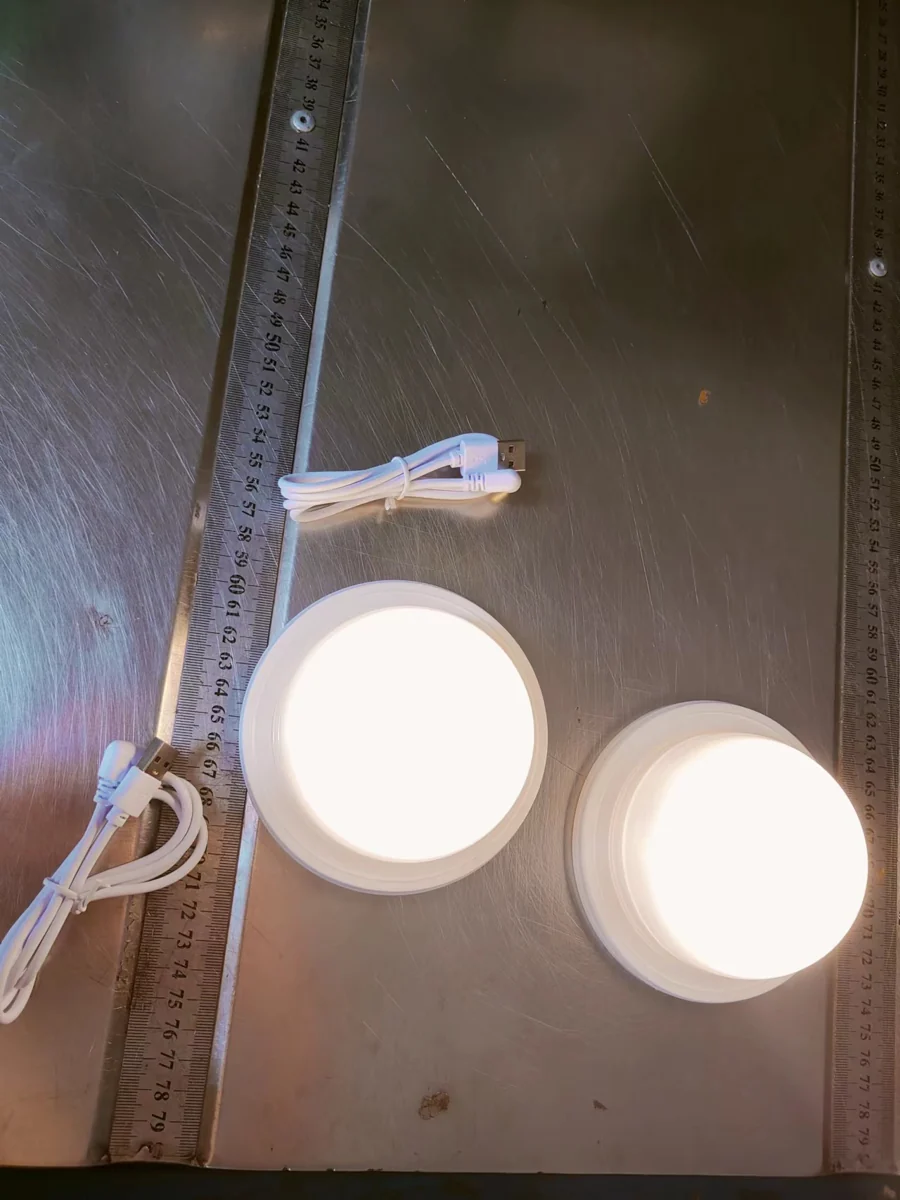
Two samples, the first 50 sets, then continuing orders
The customer’s approval was explicit: “Customer tested the sample and is confirmed.” They requested a final quotation for the first 50 units, keeping the 3000K colour of the last sample.
The first order specified the last approved sample, on/off operation, the magnet and the battery pack. It used standard packaging with the customer’s own label. This was the point at which the project moved from development into a defined supply configuration.
Vcan’s subsequent customer history confirms that the project continued with repeat orders in batches of 300 and 500 sets. The successful outcome was an adapted light unit that the customer could keep using in their lamp, supported by an approved sample and continuing supply.
Need a battery light that fixes inside your own lamp?
Start with a photo or sketch of your lamp and the diameter available for the light. Show us the part that should hold the module and describe how you want it to attach and come away. Vcan can then assess whether an existing platform is a sensible starting point.
Tell us the light colour and operating time you need. Magnetic holding, charging access and switch access should work together in the assembled lamp. Check them on a sample in the normal position and during removal, rather than judging the light only on a workbench.
This project demonstrates a customer-specific magnetic rechargeable lamp module. Holding force, mating materials, protection and the final lamp assembly still need review for each new design. For an overview of the development options, see Vcan’s custom LED module service; for approval checks, use the sample-testing checklist.
Show us the lamp you are developing
A photo and approximate module space are enough to start the discussion. We can suggest a suitable platform and what to test before your production order.
Questions about magnetic battery light modules
Can a rechargeable LED module attach magnetically to a lamp structure?
Yes, Vcan supplied a customer-specific VC-LN120 configuration with magnets for fixing the battery light inside a portable lamp. The customer approved the revised samples, placed an initial 50-set order and continued ordering in batches of 300 and 500 sets. The fixing arrangement must be reviewed with the intended lamp structure; it is not a standard fit for every housing.
Does magnetic fixing mean the LED module charges magnetically?
No. In this project the magnets were requested to hold the light on the lamp structure. Charging was a separate part of the battery-powered module configuration. Specify the mounting method and charging connection independently; adding magnets does not establish induction charging or contact charging.
Can an existing LED module be adapted without making a new housing mould?
This project began with the customer's preference to adapt an existing supplier platform and keep development cost down. Vcan used its 120mm VC-LN120 platform and developed the agreed configuration through samples. Whether another lamp can use the same approach depends on its available space, mating structure and lighting requirements.
Can I specify 3000K warm white instead of RGBW?
Yes. This customer specifically selected 3000K warm white, with on/off operation, rather than the initially discussed RGBW version. Agree the white-light configuration for your own samples; the standard catalogue model and a customised order may have different LED and battery specifications.
How much information is needed to discuss a magnetic lamp module?
Start with a photo or sketch of the lamp and the space available for the light. Show the surface or part that should hold it magnetically, and tell Vcan the colour and operating time you need. We can help define a sample configuration and the next checks without requiring a finished engineering brief first.