
OEM project · 3D prototype
A 60 mm LED Module for a 3D Lamp Prototype
A South Korean customer approved the 3D prototype, commissioned a mould and ordered 700 sets with 60 mm LED modules in March 2019.
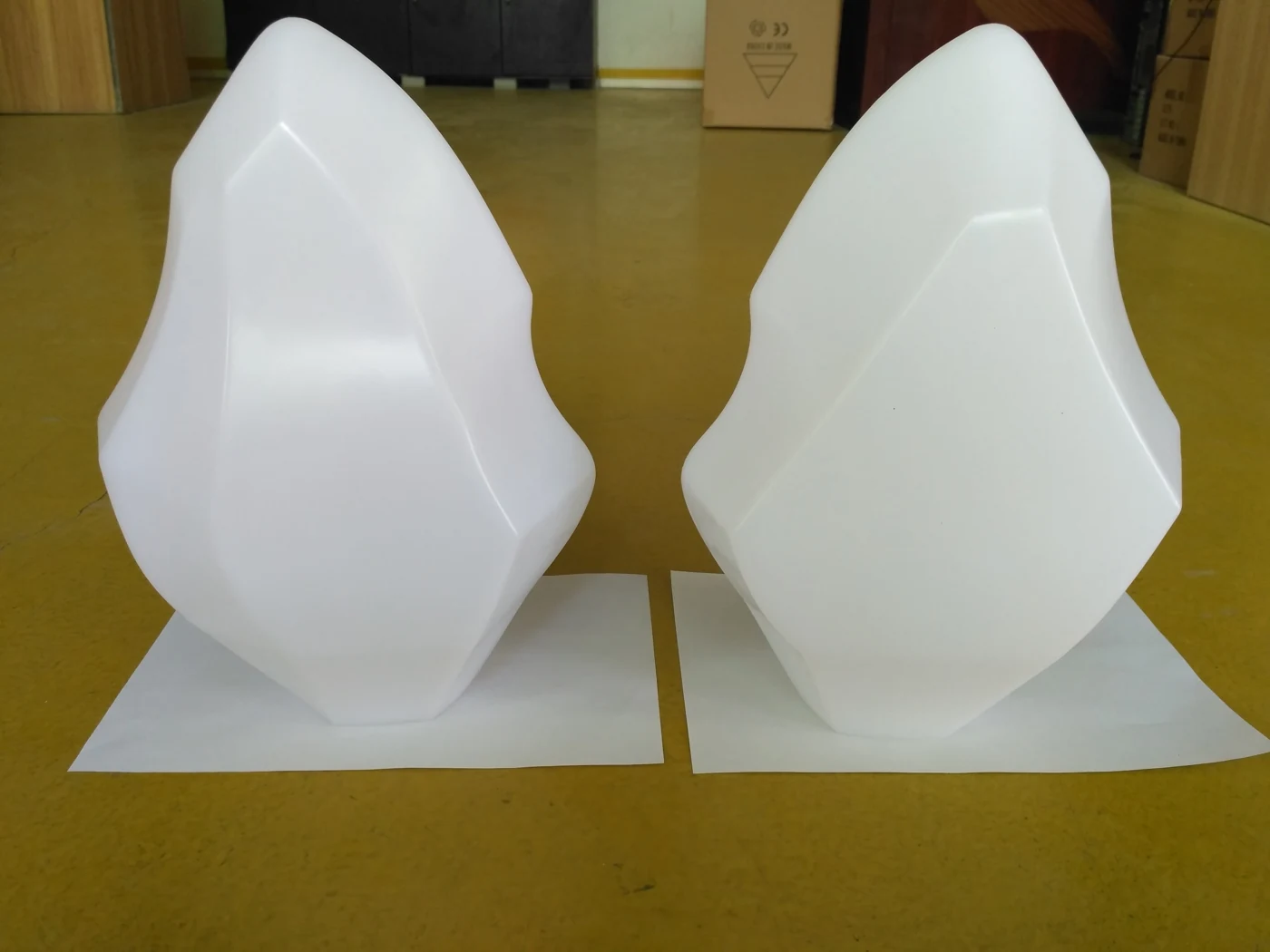
In March 2019, a South Korean customer ordered 700 sets of a custom stone-shaped lamp housing together with 60 mm LED modules. The project started with a matte finish request. The customer switched to a glossy finish, approved the 3D prototype and commissioned a new mould. For a buyer developing a lamp around an internal LED module, this case shows the decisions to make before committing to tooling.
A stone-shaped lamp that needed its own housing
The customer needed a custom outer shape with the light source fitted inside. The two project photos show the housing itself. They make it easier to see why a drawing of the complete enclosure matters: the visible outer form and the space available for the light are two separate design decisions.
| Project detail | What the customer selected |
|---|---|
| Application | Custom stone-shaped lamp housing |
| Finish | Initially matte, then gloss |
| Internal light | 60 mm LED module |
| Before tooling | Customer approved the 3D prototype |
| Order | 700 sets in March 2019, housings and modules ordered together |
The customer changed the finish from matte to gloss
The finish changed during development. The first request was for a matte exterior. The customer later chose gloss. That choice belongs on the housing specification and the approved sample, alongside the drawing that identifies the light opening. For your own project, mark the surfaces that should be glossy or matte and specify which parts of the shell are meant to glow.
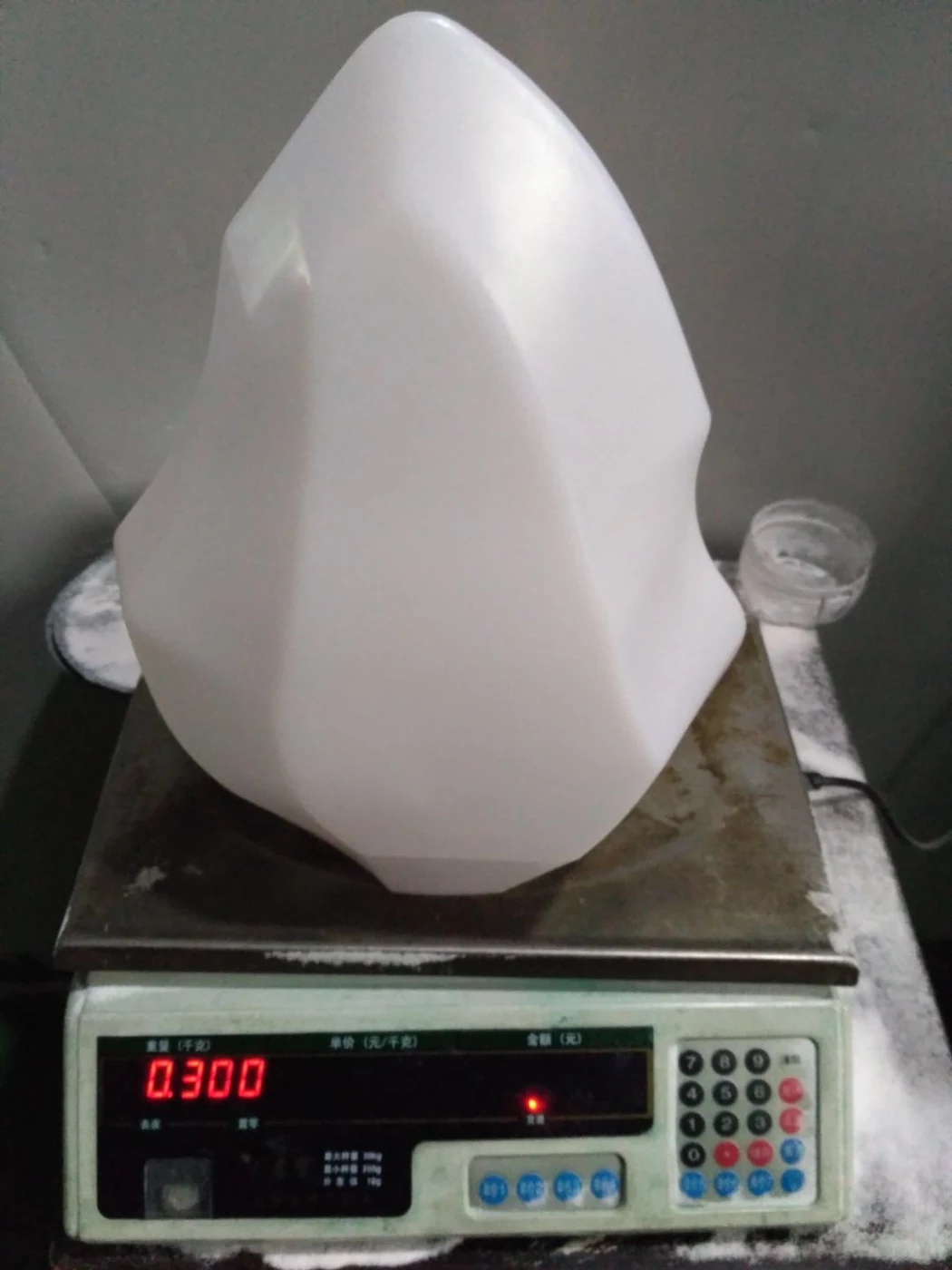
Review the finish under ordinary room light and the lit appearance as separate checks. If you compare two finishes, use the same light module and setting in each sample. The project photos here are views of the housings. Use the guide to LED module brightness in a finished housing to plan a separate comparison of the light effect.
What to show when sizing a 60 mm LED module
The project used a 60 mm module inside the housing. For a new lamp, show the bottom opening and the space behind it on the same drawing. Include the opening diameter, the available depth and the surface that will carry the light unit. Mark where the charger connects or how the light unit will be accessed once the shell is assembled. These details help determine whether a 60 mm platform is a suitable starting point for a sample.
Use the compact rechargeable LED module size guide to compare 45, 60 and 75 mm platforms. For an enquiry about a current 60 mm option, see the VC-LS60 product page. The current model and charging configuration should be checked against your drawing.
From 3D prototype approval to a 700-set order
The customer approved the physical 3D prototype before commissioning the mould. The March order included both the stone-shaped housings and their 60 mm LED modules. Keeping both together in the order connected the approved exterior to the internal light specification the customer was buying.
If your project is at this stage, record the approved finish, module size and charging or control configuration with the sample. Use Vcan’s LED module sample testing checklist to decide what to verify in the assembled prototype before placing an order.
Questions about fitting a light into a custom lamp
Can I start with just a drawing of the lamp?
Yes. A drawing or photo showing the housing, the intended light position and the approximate opening is enough to begin an OEM review. If you already have a prototype, show its underside and the available depth as well.
Does a 60 mm module fit every 60 mm opening?
Fit also depends on the full profile of the module, the opening, the fixing method and access to the charging connection. Ask for the drawing of the proposed unit and check the assembled sample before approving the housing.
When should I confirm the shell finish?
Agree the exterior finish on a physical sample before approving the mould. If the shell should glow, review the desired appearance with the selected internal light fitted.
Discuss your own lamp prototype
Send a drawing, a photo or a description of the shape and where the light goes. Add the approximate opening or module diameter if you know it. Vcan can review a standard light unit or discuss an OEM configuration for your lamp.