
Translucent porcelain · compact light inserts · sample development
Rechargeable LED Modules for Translucent Porcelain Lamps
A ceramic maker's project brings together wide-angle light distribution, compact installation space and a custom warm-white plus RGB sample option.
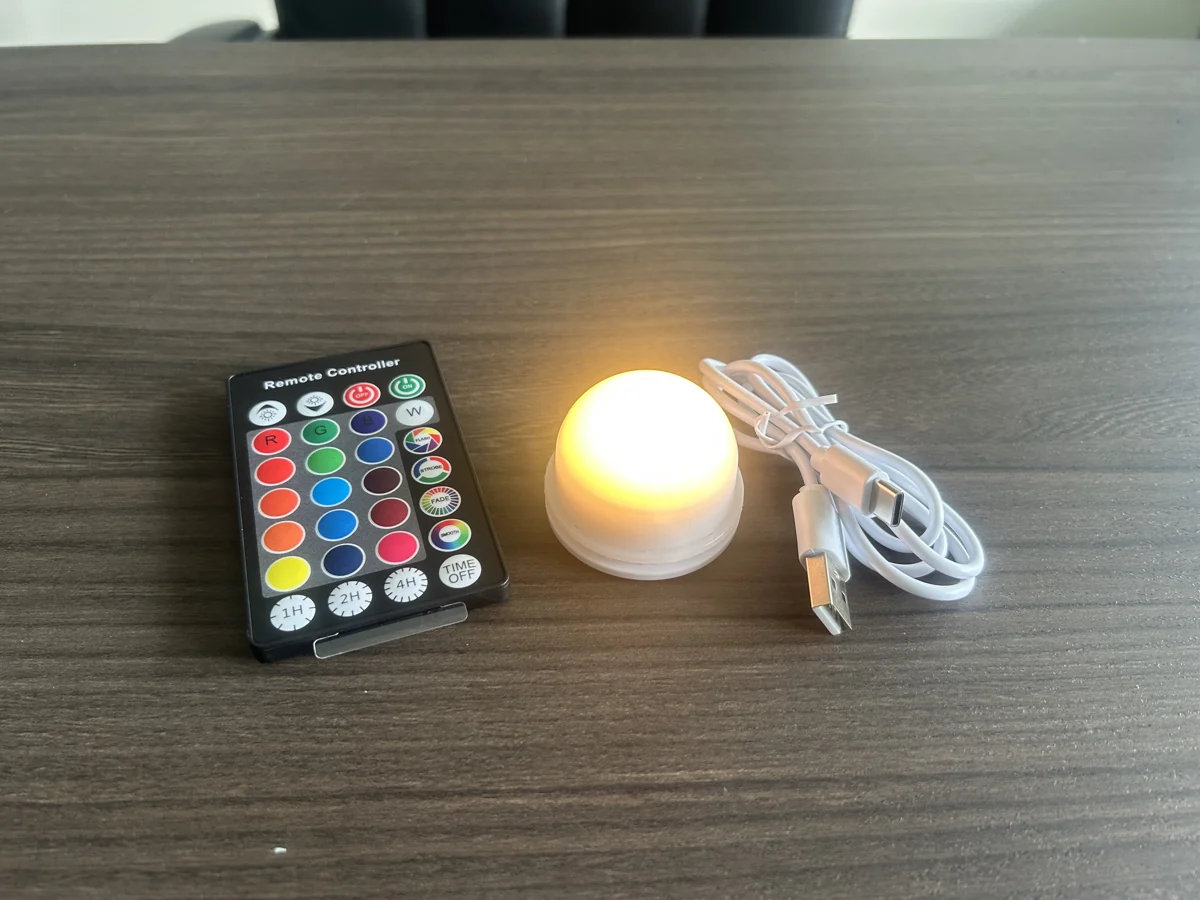
For a translucent porcelain lamp, how the light spreads through the form matters alongside brightness and colour. This customer specifically asked about the angle of spread, making wide-angle light distribution an important part of the sample review. The project also combines compact 45mm and 60mm light units with stock RGBW and a custom warm-white plus RGB option. The customer has paid for six samples, now in production for evaluation inside the porcelain.
The brief started with the porcelain, rather than a fixed module specification.
The customer wanted a light inside translucent porcelain and already knew that warm white worked for the intended appearance. There was no precise colour-temperature specification at the start. The conversation then moved to practical questions: which size would fit, whether RGBW could provide the desired brightness, whether the white light could be dimmed, and how to try different options.
That is a useful starting point for a ceramic lamp maker. A reference effect and the available installation space can establish the first sample brief, even before every electrical detail has been selected.
The customer specifically wanted to know how widely the light spreads.
After discussing the sample arrangements, the customer asked about the light's angle of spread. This identifies a further selection criterion: the light needs to reach through the surrounding translucent porcelain form. Wide-angle light distribution is therefore part of evaluating the module inside the finished lamp.
Light spread and source lumens describe different aspects of the proposed light engine. The broad spread discussed here is relevant to reviewing the illuminated body, while the lumen reference addresses source output. Both belong alongside the available space and the desired warm-white or RGB appearance in the sample brief.
The supplied record does not include a measured light-distribution diagram, so no numerical beam angle is specified here. Assess the actual spread through each porcelain form with the selected module position. The shape, opening and internal arrangement still need to be checked in the assembled sample.
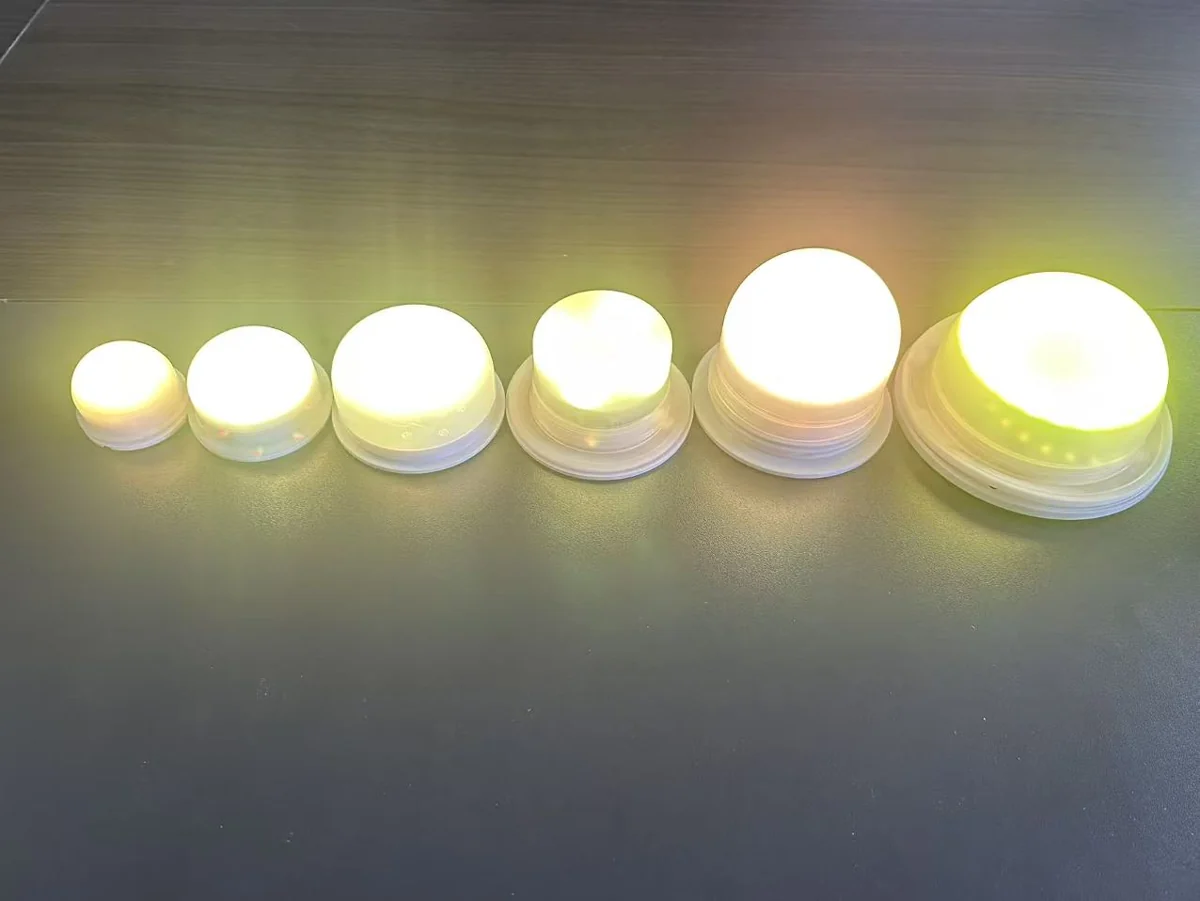
The smaller forms accepted 45mm; larger forms could be adapted for 60mm.
The buyer identified the 45mm VC-LS45 platform as suitable for smaller forms. For larger pieces, the buyer was willing to adapt the design to accommodate the 60mm VC-LS60 platform. This made both sizes relevant to the same product range.
A nominal diameter is only the first fit check. Review the module's complete profile, the mating structure, access to the switch and space for the charging connection. Use the 45mm, 60mm and 75mm size guide for platform comparison; confirm the selected sample and drawing before finalising the porcelain interface.
Keep the white-light choice separate from the RGB effects.
For this enquiry, Vcan described the stock 45mm and 60mm RGBW options as having a cool-white channel, around 6000K. A warm-white configuration needed a separate sample arrangement. Starting with stock RGBW could help the buyer assess the platform, but it would not settle the final warm-white appearance.
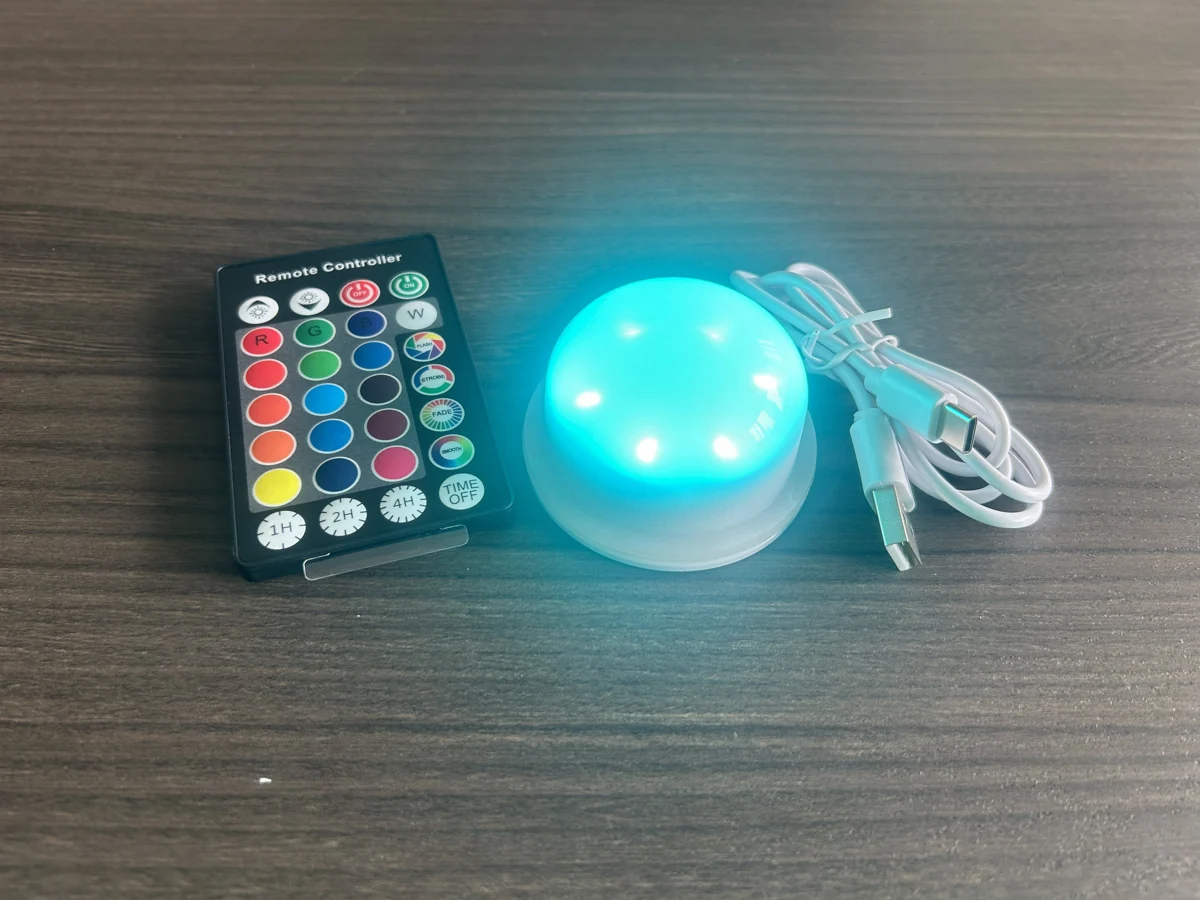
The buyer also wanted to try RGB colours and asked about dimming. The resulting comparison therefore retained RGB alongside the warm-white option, rather than treating warm white and colour effects as mutually exclusive choices. RGBW remote dimming was confirmed in the discussion. A proposed three-step brightness programme was also discussed, but it is not recorded here as the final sample programme.
Specify the white channel when ordering. An orange RGB effect is not a substitute for an agreed warm-white LED specification. Our white versus RGBW guide explains that distinction.
Six paid samples create a focused comparison.
| Sample configuration | Quantity | What the comparison can help assess |
|---|---|---|
| 45mm warm white + RGB | 2 | The requested white-light appearance with colour options in the smaller platform |
| 45mm stock RGBW | 2 | The stock white channel and RGB operation in the same nominal size |
| 60mm stock RGBW | 2 | The larger platform for forms the customer can adapt |
This is a sample-development order, not a completed application test or a bulk-production result. The earlier discussion of a possible larger order is not treated as a confirmed production commitment.
Source lumens and the appearance through porcelain answer different questions.
The buyer asked for a lumen figure. Vcan supplied approximate reference outputs of 120lm for the 45mm option and 150lm for the 60mm option during the enquiry. These are supplier-provided references, not measurements made through the customer's porcelain. The conversation does not provide the test conditions needed for a controlled warm-white versus stock-RGBW comparison.
Evaluate the light insert in each intended form. Check whether the visible body has the desired glow, whether some areas remain dark and whether the selected white setting gives the intended appearance. Keep the housing and control setting identified when comparing samples. A photograph can record appearance, but its exposure and white balance do not measure lumens or colour temperature.
The module brightness guide explains why a bare light-source rating does not, on its own, establish the result inside a finished product.
Leave access for charging and confirm how nearby lights should respond.
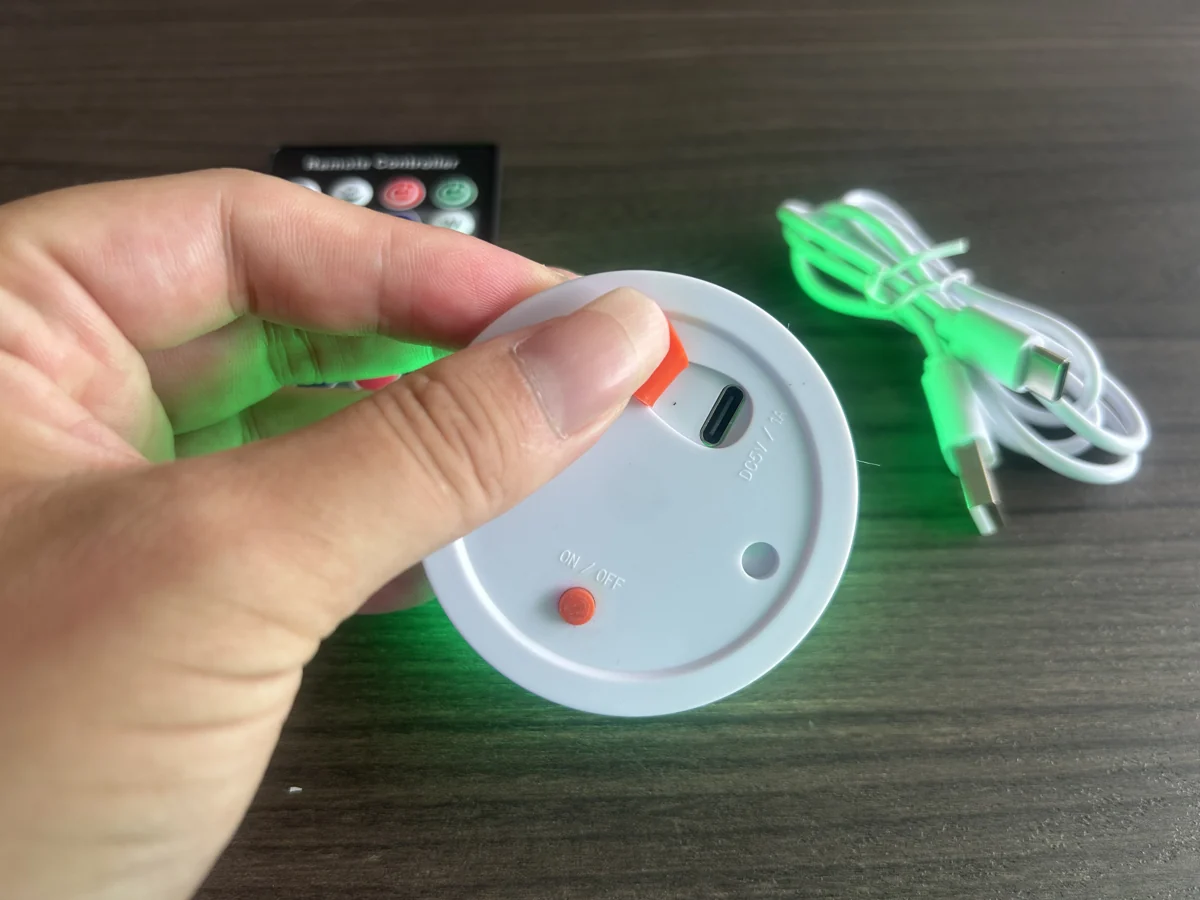
The buyer's questions extended beyond colour: would each light be dimmable, and could several lights be controlled separately? Supplying one remote with each unit does not establish exclusive pairing. If several porcelain lamps will stand together, confirm whether the requirement is shared operation or separate control, then check the selected arrangement in that layout.
Once the samples arrive, use the sample testing checklist to record fit, light appearance, controls, charging access and operating time at the intended setting. Those observations will provide the basis for approving the next configuration.
Developing a porcelain or ceramic lamp?
Share the form and the light you want it to produce.
Send product photos, the available module space, your white-light or RGB preference, required working time and expected quantity. Vcan can review a standard rechargeable light unit or a suitable custom configuration for sample evaluation.
Questions about LED modules for porcelain lamps.
Can a rechargeable LED module be used inside translucent porcelain?
Vcan can review a module for the available space and intended lighting effect. In this project, a ceramic maker selected 45mm and 60mm sample configurations for evaluation. The six samples are paid for and in production; their performance inside the customer's porcelain has not yet been reported.
Can RGBW include warm-white light?
Yes. The white channel can be specified separately from the RGB colour effects. This sample order includes a 45mm warm-white plus RGB option alongside stock RGBW versions. Confirm the required white-light specification before approving production.
How should light spread be assessed for a porcelain lamp?
The customer specifically asked about the angle of spread. Wide-angle light distribution is relevant to illuminating a translucent lamp body, but the supplied project record does not establish a measured beam angle. Evaluate the coverage through the actual porcelain form with the selected module position.
Is an orange RGB colour the same as warm white?
No. An orange or yellow RGB effect does not establish a warm-white colour temperature. Evaluate the specified white channel in the actual porcelain form.
Can each supplied remote control only its own light?
One remote supplied with each light does not, by itself, establish exclusive pairing or individual addressing. If nearby lights must respond separately, confirm that requirement and test the selected control arrangement before approval.